Selected and explained by Armand at Greenlytes
Solar Flagpole Lights
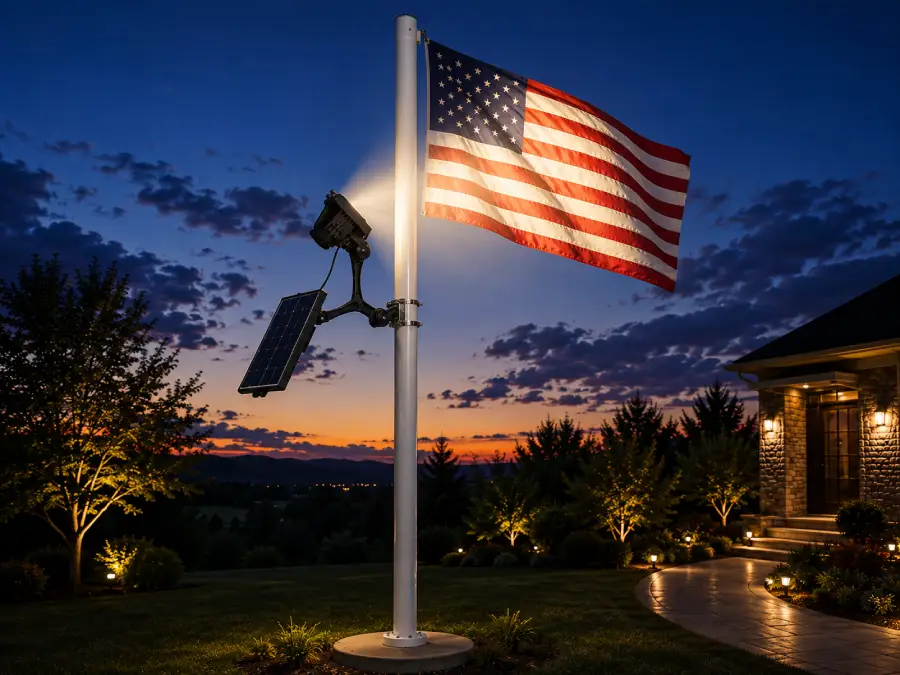
A flagpole light has a harder job than simply lighting a pole: it has to keep a moving flag visible above the ground. Start with the flag height, size and mounting position, then work backward to coverage, charging and runtime.
- Carefully selected
- Dusk-to-dawn lighting
- Built for outdoor use
Designed for
Coverage that reaches the flag
Greenlytes Pick
Featured Product
Our premium pick for high-output multi-directional flag illumination on taller residential, commercial and industrial poles.
Greenlytes Pick
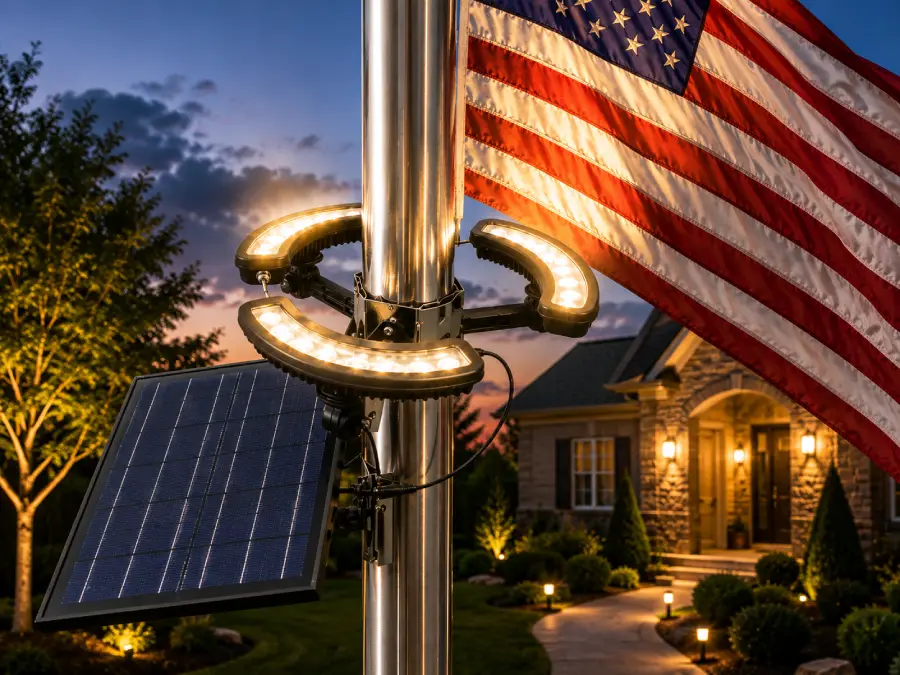
Polepal Tri-Extreme Commercial Solar Flagpole Light
Three individually adjustable light heads deliver more than 1000 lumens of upward illumination around the pole. The system combines 18 NexGen LEDs, a 15 W solar panel and a 12,000 mAh lithium battery for demanding 25–40 ft flagpole installations.
- Light output
- 1000+ lm High-output illumination
- Battery capacity
- 12,000 mAh 3.7 V lithium battery
- Solar panel
- 15 W 6 V solar panel
Shop the collection
Choose by pole, coverage and mounting — not just brightness.
The five models solve different flag-lighting jobs. Start with pole height, flag coverage and mounting position, then compare output and solar capacity.
Premium multi-directional flag illumination
Polepal Tri-Extreme Solar Flagpole Light
A high-output three-head system with 18 NexGen LEDs, adjustable beams and 360° upward coverage for demanding 25–40 ft flagpoles.
- Light output
- 1000+ lm High output
- Light heads
- 3 heads 18 LEDs
- Pole height
- 25–40 ft Pole range
Focused commercial flag illumination
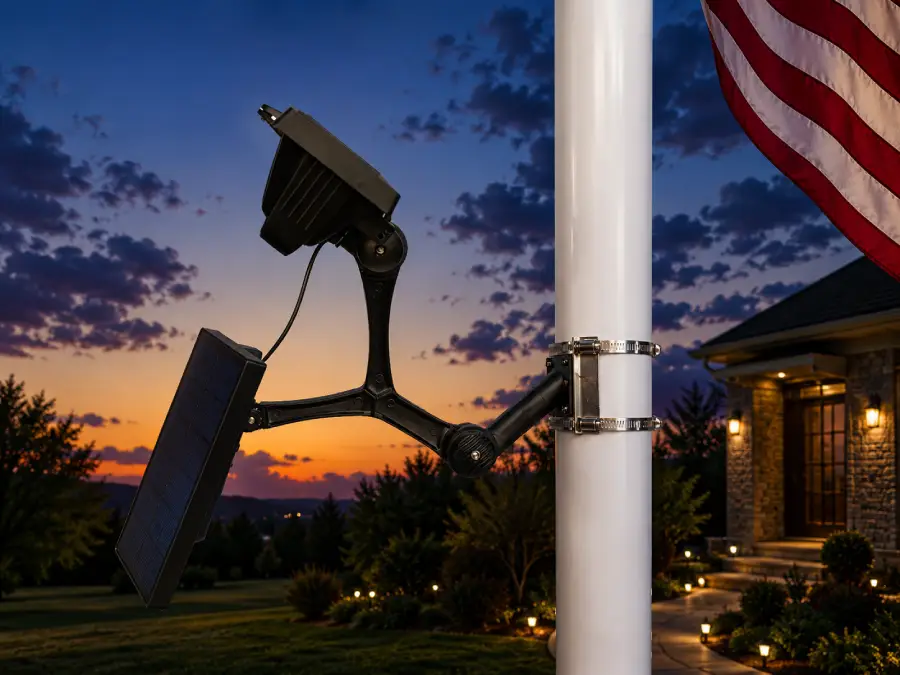
Commercial Solar Flagpole Light
An 8-LED commercial flag light with an adjustable head, tilting solar panel and secure mounting for 2–6 inch flagpoles.
- Light output
- 280 lux Measured
- LED count
- 8 LEDs Focused beam
- Pole fit
- 2–6 in Pole diameter
Adjustable spot or flood flag lighting
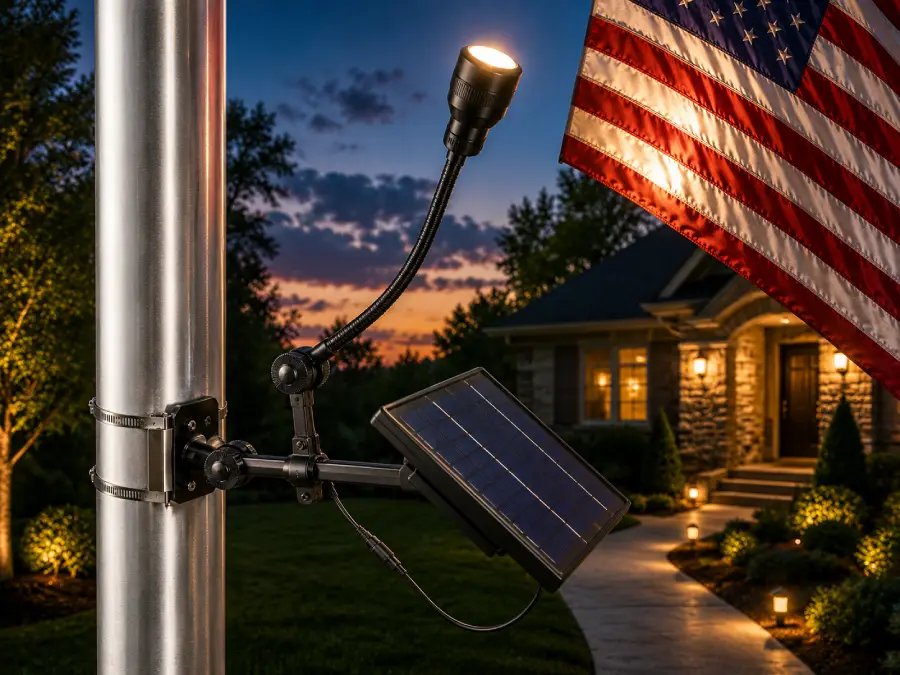
Ultra Series CREE Solar Flagpole Light
A CREE-based flag light with selectable Spot or Flood beams and flexible-arm or fixed-arm mounting for 20, 30 or 50 ft poles.
- Beam modes
- Spot/Flood Selectable
- Mounting
- Dual Flex / Fixed
- Pole heights
- 20–50 ft 20 / 30 / 50 ft
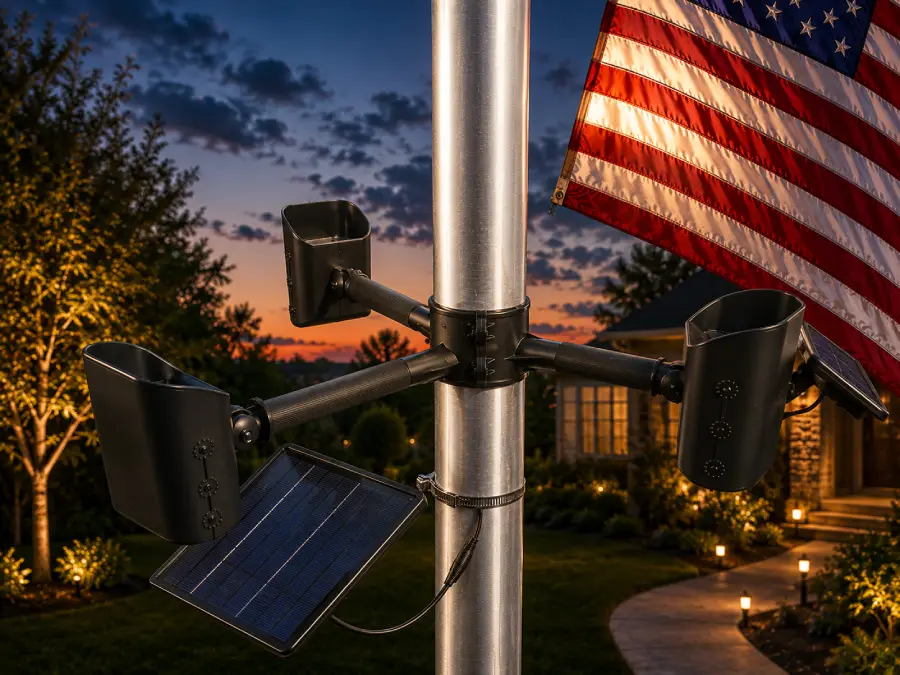
Versatile three-head flag coverage
3-Head Solar Flagpole Light
Three independently positionable solar lights provide 360° aiming flexibility for flagpoles up to 45 ft, with mounting options for different pole diameters.
- Light output
- 420 lux 3-head system
- Light system
- 3 heads 12 LEDs
- Pole height
- 45 ft Max pole height
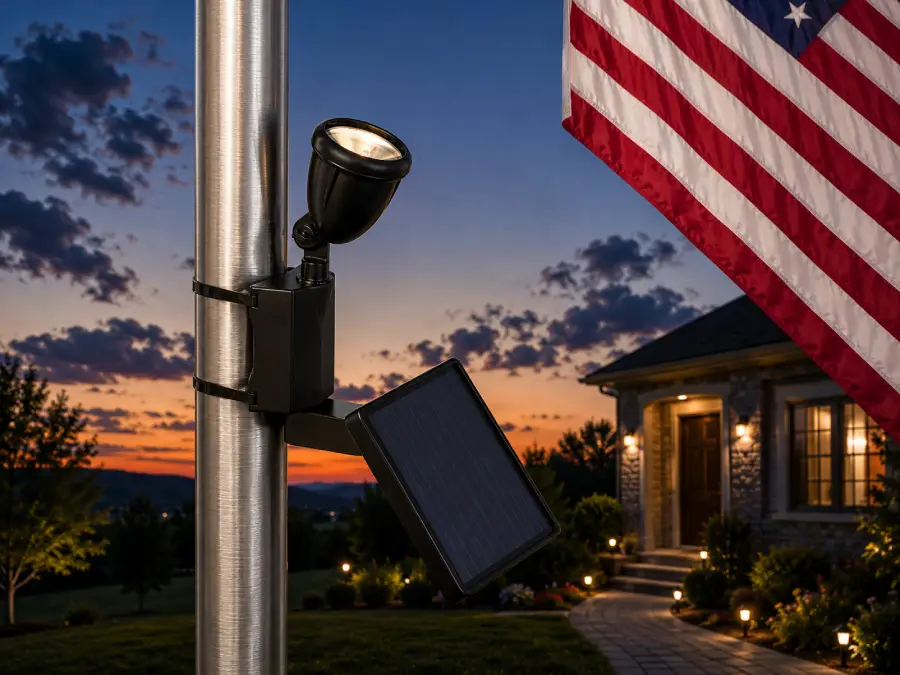
Compact automatic flag illumination
MAXSA Solar-Powered LED Flag Light
A compact pole-mounted solar flag light with a 0.5 W LED, two brightness settings and automatic dusk-to-dawn operation for straightforward residential installations.
- Light source
- 0.5 W LED output
- Operation
- Auto Dusk to dawn
- Pole fit
- 1–4 in Pole diameter
Get More from Your Flagpole Light
A flagpole setup can lose performance even when the light itself is fine. Charging conditions, mounting angle, flag movement and seasonal weather all affect what you actually see after dark.
Sunlight
Available only where the panel receives useful sun during the day.
Energy
The day’s solar input becomes the night’s available energy.
Light
Useful only when the emitted light actually reaches the moving flag.
Performance
Good results come from keeping charging, coverage and mounting in balance.
Start with stored energy
Charge Before First Use
Give the battery a proper initial charge before judging brightness or runtime. A weak first night can simply reflect a weak starting charge.
Protect daily charging
Keep the Panel in Direct Sun
Look at the panel’s sky exposure, not just the pole location. Trees, buildings and even the pole itself can reduce useful charging at different times of year.
Improve flag coverage
Aim the Light at the Flag
Aim for the space the flag actually occupies, not the pole beneath it. The target moves, so the useful beam has to tolerate changes in flag position.
Keep the mounting secure
Recheck Mounting After Severe Weather
Recheck the bracket, panel and fixture after storms or seasonal changes. A small shift in angle can move useful light away from the flag or reduce charging.
- Better charging Keep the panel where charging actually works
- More even coverage Keep useful light on the moving flag
- Longer runtime Match nightly runtime to the available solar input
- Secure mounting Preserve the intended beam angle after weather and wind
Continue with Greenlytes Lab
Go deeper on the variables behind the recommendation.
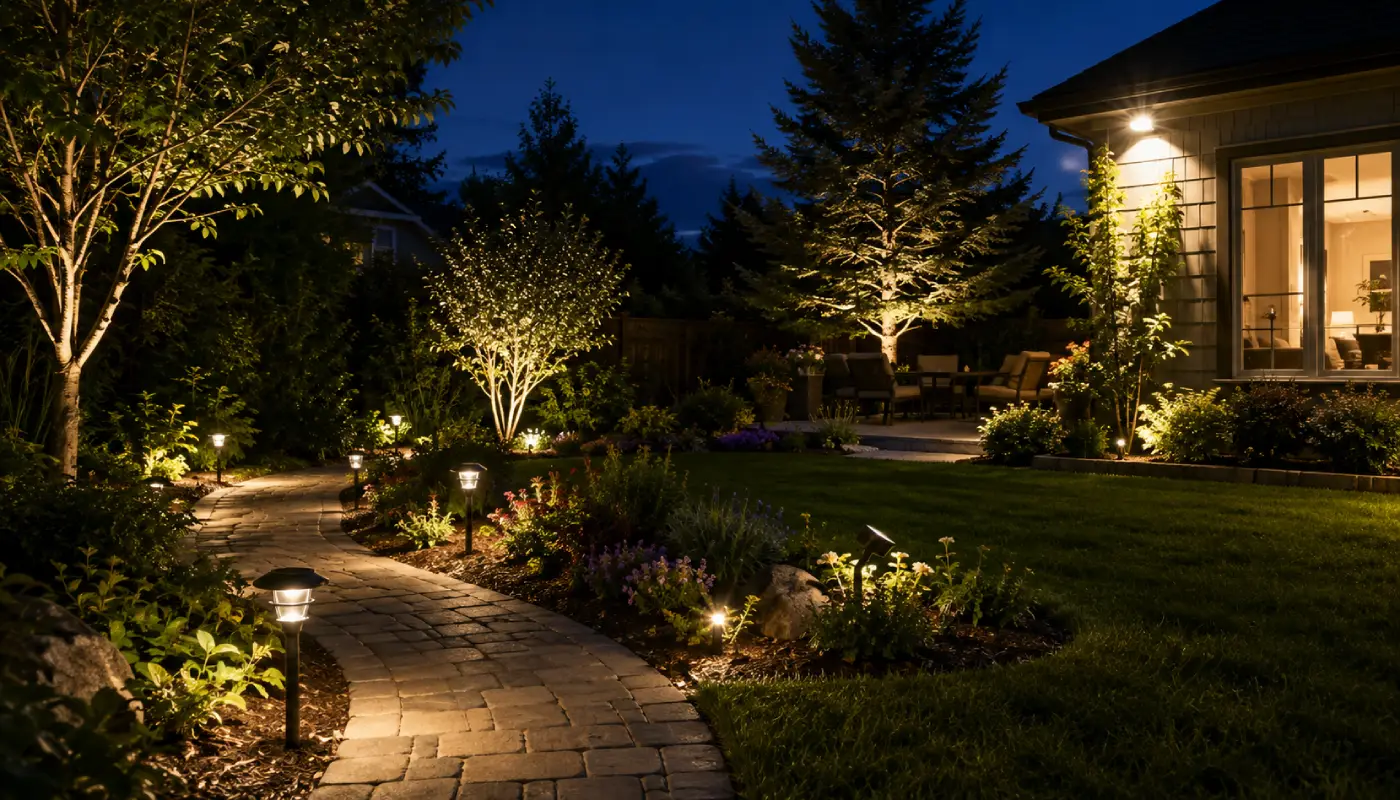
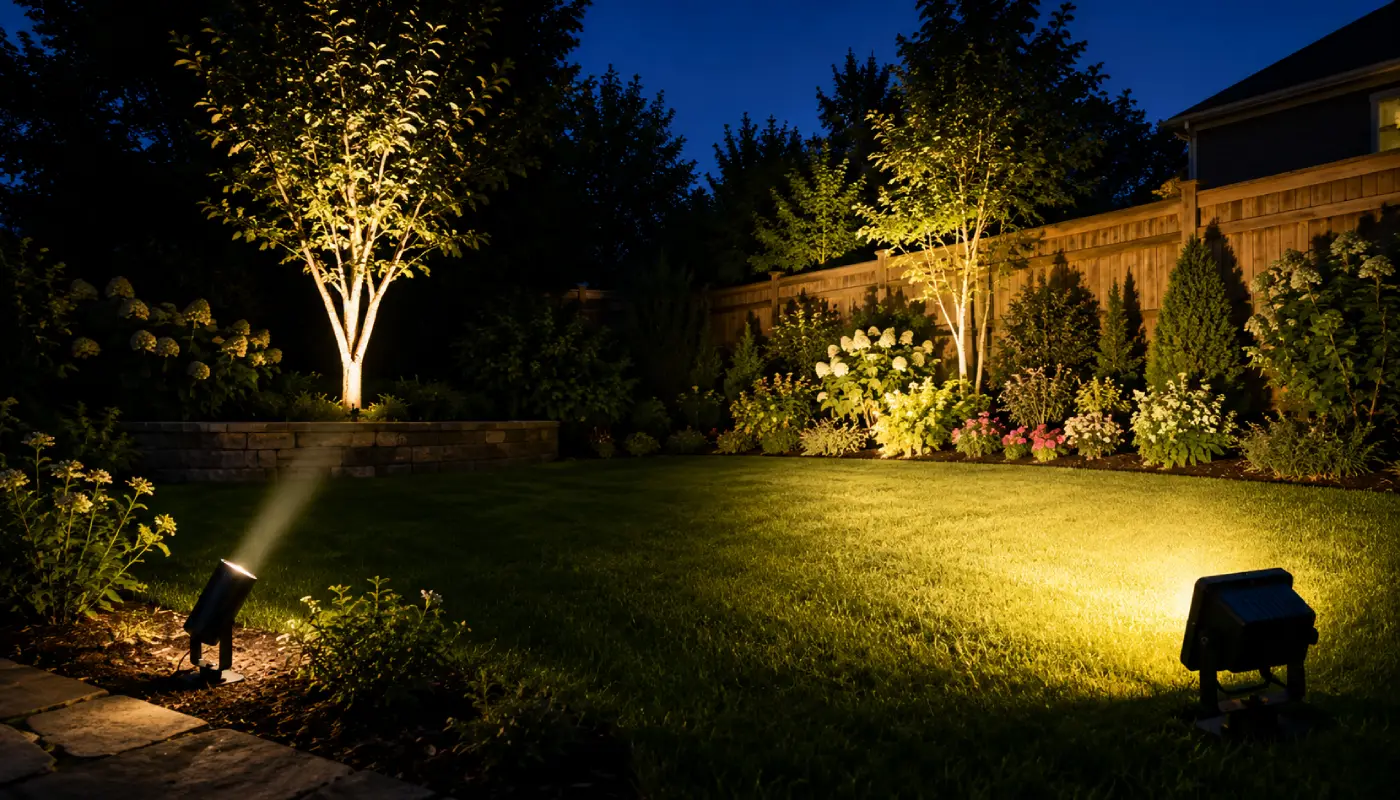
These Greenlytes Lab guides provide the deeper explanation behind the category advice: useful brightness, beam distribution and winter charging. Use them when a short category answer needs more context or supporting detail.
Why Greenlytes
How I decide what belongs on Greenlytes
I base Greenlytes recommendations on documented specifications, supplier information and the practical job each flagpole light is designed to do. When a claim comes from a manufacturer or supplier, I treat it as sourced product information; Greenlytes analysis is the interpretation of what those specifications mean for the buyer.
Specification review
Specifications are compared for what they change in practice: coverage, mounting, charging, runtime and compatibility with the pole. Headline numbers are not treated as conclusions on their own.
Use-case fit
Each model is matched to a real setup. Pole height matters, but flag size, movement, mounting geometry and solar exposure can change the decision just as much.
Supplier consistency
Preference goes to products backed by clear specifications and supplier information that can be checked, compared and kept current.
Clear trade-offs
Every useful recommendation needs a boundary: where the product fits, where it becomes less suitable and when another flagpole-light setup makes more sense.
Ongoing review
Recommendations are reviewed when specifications change, products are updated or a better-fit option becomes available.
Buyer-first selection
A smaller, clearer selection is more useful than a large catalog of products that solve the same problem without a clear reason to choose them.
Editorial review: Armand, Greenlytes · Updated
“My starting point is simple: the pole is not the target. The flag is. Once that is clear, coverage, mounting and energy become much easier to judge.”
01 How bright should a solar flagpole light be?
Brightness only matters if the light reaches the flag. A high lumen number at the fixture does not tell you how much of that output reaches the flag after distance, beam spread and movement are taken into account.
Compare the flag height and size with the fixture’s distribution pattern and mounting position. The useful question is how much of the moving flag stays visibly illuminated, not which box carries the largest number.
Greenlytes insight
Compare visible coverage on the flag, not lumen output in isolation.
02 Do solar flagpole lights work during winter?
Yes, but winter puts more pressure on the energy budget. Charging days are shorter at the same time that nights are longer, so the system has less opportunity to replace the energy it uses after dark.
Panel exposure, seasonal shade, cleanliness and battery capacity all matter. If runtime drops in winter, check what changed on the charging side before assuming the LEDs or battery have failed.
Greenlytes insight
Winter performance is often a charging problem before it becomes a lighting problem.
03 Should a flag remain illuminated at night?
If a flag is displayed outdoors after dark, the practical lighting goal is to keep the flag itself visibly illuminated. Lighting the pole or the ground below it does not solve that problem.
A solar flagpole light can automate that illumination without running electrical wiring through the yard, but the installation still has to be judged by what reaches the moving flag.
Greenlytes insight
The illuminated target is the moving flag, not the pole beneath it.
04 How long do rechargeable batteries usually last?
Battery life depends on chemistry, temperature, charging conditions and nightly cycling. Gradually shorter runtime is a normal sign of aging, but a weak charge caused by shade or dirty panels can look similar.
Before assuming the battery has reached the end of its useful life, check whether the panel is still receiving the same amount of sun and whether seasonal conditions have changed.
Greenlytes insight
A replaceable battery is valuable because it can extend the useful life of the complete fixture.
05 Can one solar light illuminate a 25-foot flagpole?
It can, but 25 feet is only one part of the problem. A large flag, a difficult mounting position or a narrow distribution pattern can make one light inadequate even when its output appears strong on paper.
Judge the complete geometry: pole height, flag dimensions, where the fixture sits and how the light is distributed as the flag moves. One bright center spot is not the same thing as useful flag coverage.
Greenlytes insight
Pole height is a distance; the flag is the target. Do not choose from height alone.
06 What matters more: lumens or beam angle?
Neither measurement is useful on its own. Lumens describe total light output, while beam angle and fixture geometry determine where that output goes.
For flagpole lighting, coverage is the result you care about. A narrow beam may look strong but miss much of a moving flag; a broader distribution may cover more area but with less intensity.
Greenlytes insight
Coverage on the moving flag matters more than either lumens or beam angle by itself.
07 How do I choose the right solar flagpole light?
Start with the flag and pole geometry: flag size, pole height and the position from which the fixture can illuminate the flag. Those answers narrow the useful coverage and mounting options first.
Then solve the solar side: panel exposure, seasonal shade and how much nightly runtime you expect. Only after that should you compare the remaining products and their specifications.
Greenlytes insight
Flag, geometry, coverage, mounting, energy, then product. That order avoids a lot of bad comparisons.
Make a confident choice
Ready to choose the light that fits your flagpole?
Go back to the products with the flag, coverage, mounting position and energy needs in mind. If one of those still feels unclear, Greenlytes Lab explains the underlying variable in more detail.