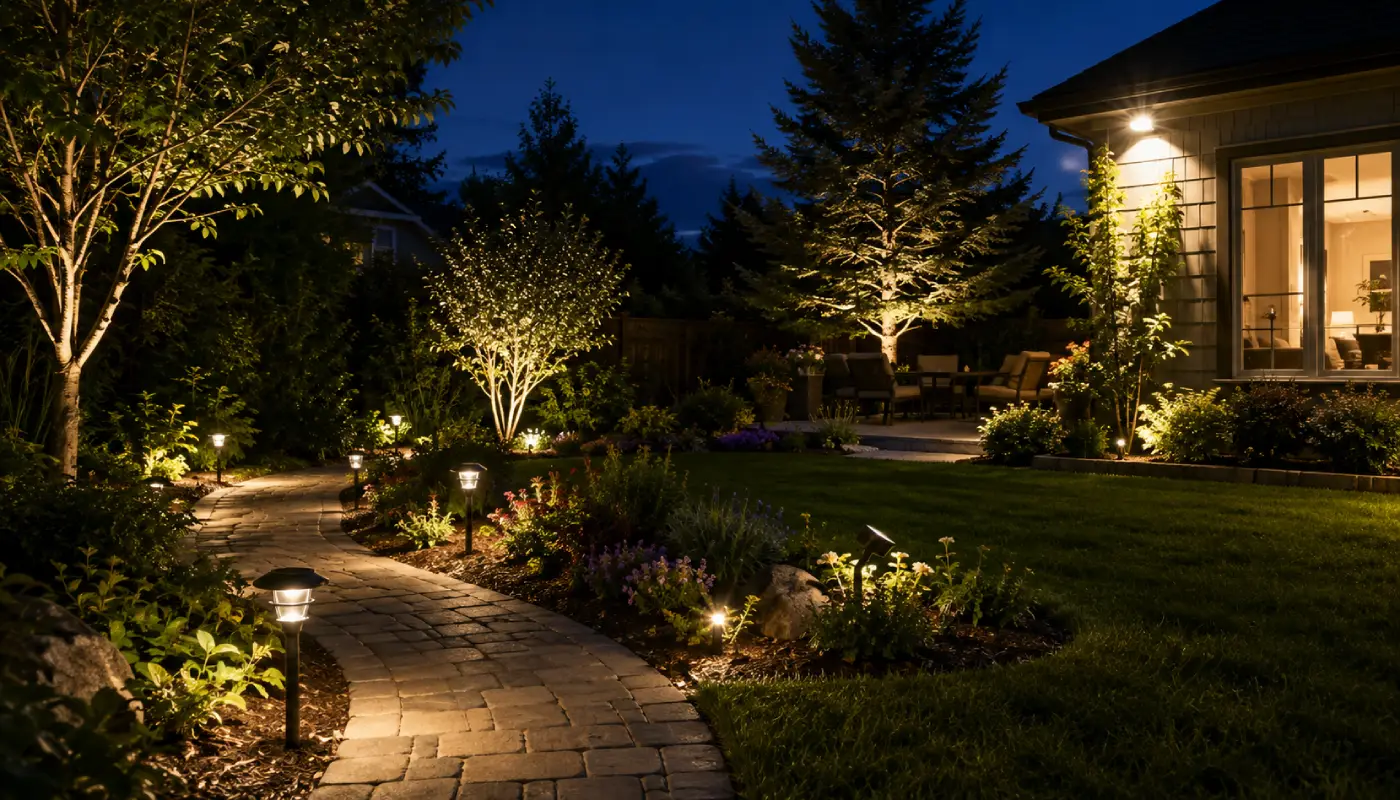
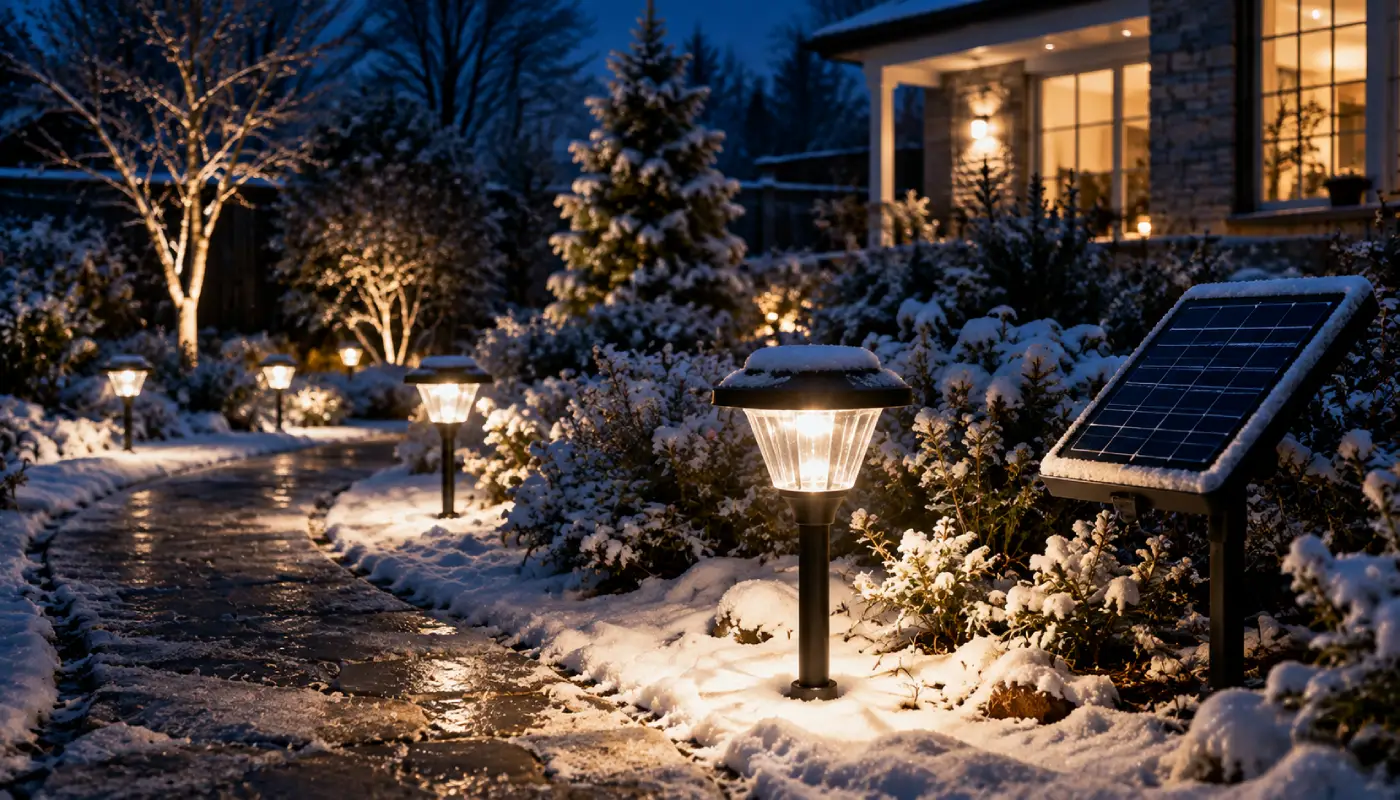
One tree or feature
Spotlight usually fits best
A tighter beam keeps attention on the subject and reduces unnecessary spill into the surrounding garden.
Choose a spotlight when you want to highlight one object. Choose a floodlight when you need broader coverage across an area. The real difference is the shape of the beam, not simply how many lumens the fixture produces.
A spotlight keeps more of its output inside a narrower beam, which makes it useful for trees, flags, signs and architectural details. A floodlight spreads its output across a wider area, which suits driveways, entrances, patios, walls and general security coverage.
Spotlight usually fits best
A tighter beam keeps attention on the subject and reduces unnecessary spill into the surrounding garden.
Floodlight usually fits best
A wider beam provides more even coverage across vehicles, gates, doors and walking areas.
Spotlight with enough reach
A focused upward beam helps the light reach the flag instead of illuminating a broad patch of sky and ground.
Floodlight or wide-beam fixture
Broad, controlled coverage usually feels more useful than one concentrated hotspot.
Often both for layered coverage
A floodlight can cover the main area while a spotlight targets a gate, side passage or other specific risk point.
Two fixtures can have the same lumen rating and still produce very different results. One may create a bright, defined focal point. The other may spread softer light across a much wider area.
Imagine using the same amount of paint in two ways. One brush places it on a small detail. The other spreads it across a larger wall.
A spotlight directs light into a relatively narrow beam. That makes the illuminated subject appear more pronounced and helps the beam reach farther before spreading out.
A floodlight distributes light across a broader field. The result is wider coverage, but the same total lumen output is shared across more space.
Beam angle describes how widely the main part of the light spreads as it leaves the fixture.
A small angle creates a tighter beam. A larger angle creates a wider beam. Professional outdoor products may offer several optical distributions within the same fixture family, from narrow spot to wide flood.
There is no universal angle at which every manufacturer stops calling a product a spotlight and starts calling it a floodlight. Treat terms such as narrow, medium and wide as useful descriptions, then check the stated angle or beam diagram.
For focused landscape work, begin with solar spot lights that publish or clearly demonstrate their beam pattern.
Spotlights are most useful when you want the viewer to notice one tree, flag, sign, column, sculpture or architectural detail.
A focused beam can create depth and contrast in a garden. It can also travel upward or across a longer distance without spreading all of its output onto nearby ground.
The beam still needs to be wide enough for the subject. A narrow spot aimed at a mature tree may light only part of the trunk, while missing the canopy.
Flagpoles are a good example. The light needs a controlled upward beam with enough spread to cover the flag as it moves, which is why purpose-built solar flagpole lights are more useful than choosing by lumen count alone.
Floodlights are designed to illuminate a broader area such as a driveway, entrance, yard, patio, wall or work zone.
A wider beam makes it easier to see movement and obstacles across the scene. It also reduces the risk of one intense hotspot surrounded by dark areas.
For driveways and open spaces, compare beam width and mounting position across solar flood lights instead of assuming that the highest-output model will provide the most even result.
Lumens describe total visible light output. They do not tell you how concentrated that light will be on a surface.
A narrow spotlight may make one tree look dramatically bright because much of the output lands on a small area. A floodlight with the same lumen rating may look softer because its output is distributed across a driveway or wall.
This does not mean the spotlight produces more total light. It means the beam places more of that light within the smaller target area.
Every beam becomes wider as it travels away from the fixture.
A spotlight mounted close to a small feature may create a tight pool of light. Move the same fixture farther away and the beam covers more of the subject, but with lower intensity.
A floodlight mounted too low can create glare and poor coverage. Mounted higher and aimed carefully, it may spread light more evenly across a driveway or entrance.
Product beam diagrams are most useful when they show both the distribution and the intended mounting arrangement.
Broad coverage helps visibility, but uncontrolled light can shine into windows, neighbouring properties or the eyes of people approaching the area.
Aim the light downward where practical and choose a fixture with a defined optical distribution rather than relying on raw brightness.
For residential security, compare motion detection, shielding, beam control and mounting position across solar security lights .
The objective is to reveal the area clearly without creating a blinding source or deep shadows immediately beyond it.
A floodlight and spotlight do not compete for every job. They can solve different parts of the same space.
A floodlight may provide safe general visibility across a patio or driveway. A spotlight can then draw attention to a tree, sign, gate or architectural feature.
This layered approach often looks better than asking one very bright fixture to provide security, navigation and decorative accent lighting at the same time.
These are practical distinctions, not rigid definitions. Actual beam angles and distributions vary between products.
| Decision | Spotlight | Floodlight | What matters most | Typical use |
|---|---|---|---|---|
| Beam shapeHow light spreads | Narrowermore focused | Widermore area coverage | Published beam angle or distribution diagram | Subject versus space |
| Visual effectHow the scene feels | Defined, dramatic and directional | Broad, even and functional | Contrast, glare and spill | Accent versus general visibility |
| Best subjectWhere it excels | Tree, flag, sign, column or sculpture | Driveway, yard, wall, patio or entrance | Size and distance of the target | Focused feature versus broad area |
| CoverageArea illuminated | Smaller area with stronger concentration | Larger area with lower concentration per point | Mounting distance and beam width | One feature versus a complete zone |
| Security useResidential coverage | Gate, side path or specific access point | Garage, driveway, yard or entrance area | Motion sensor, aim and shielding | Often combined |
| Common mistakeWhat goes wrong | Beam too tight for the subject | Too much spill and glare | Choosing by lumens without checking optics | Poorly matched coverage |
A "wide spotlight" and a "narrow floodlight" may overlap in beam angle.
Mounting farther away increases coverage while reducing intensity on the target.
Beam shape, aim, shielding and mounting determine where those lumens are useful.
Most disappointing installations are not caused by a weak LED. They happen because the beam does not match the subject, distance or area.
Total output does not tell you whether the light forms a narrow focal beam or spreads across an entire wall.
Do this instead: Compare beam angle and distribution before maximum output.
The trunk may look bright while most of the canopy remains outside the beam.
Do this instead: Match beam width to the size of the feature at the actual distance.
A broad, high-output beam can remove atmosphere, create glare and spill into windows or neighbouring properties.
Do this instead: Use lower output, controlled aiming or focused accent lighting.
A beam can look correct from beside the light while appearing harsh or incomplete from the house, path or street.
Do this instead: Judge the result from the place people will actually see it.
General visibility, decorative accent and security coverage often need different beam shapes and mounting positions.
Do this instead: Use a broad beam for useful area coverage and focused beams for the features or access points that deserve extra attention.
Once the beam type is clear, compare output, mounting, controls, charging design and weather resistance within the relevant category.
 01
01
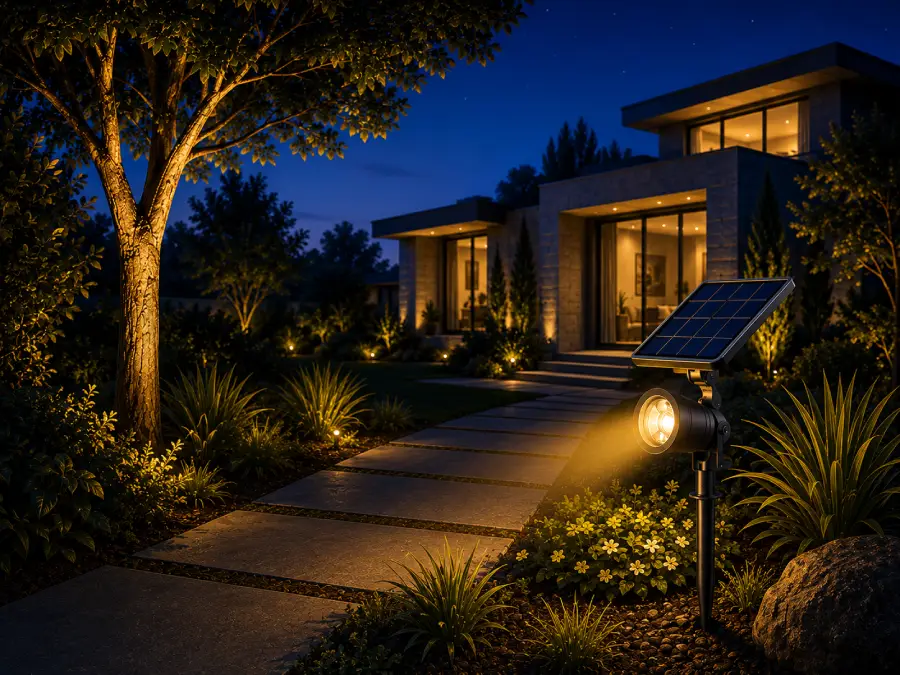
Best for directional accent lighting on planting, sculptures, signs and architectural details.
Explore solar spot lights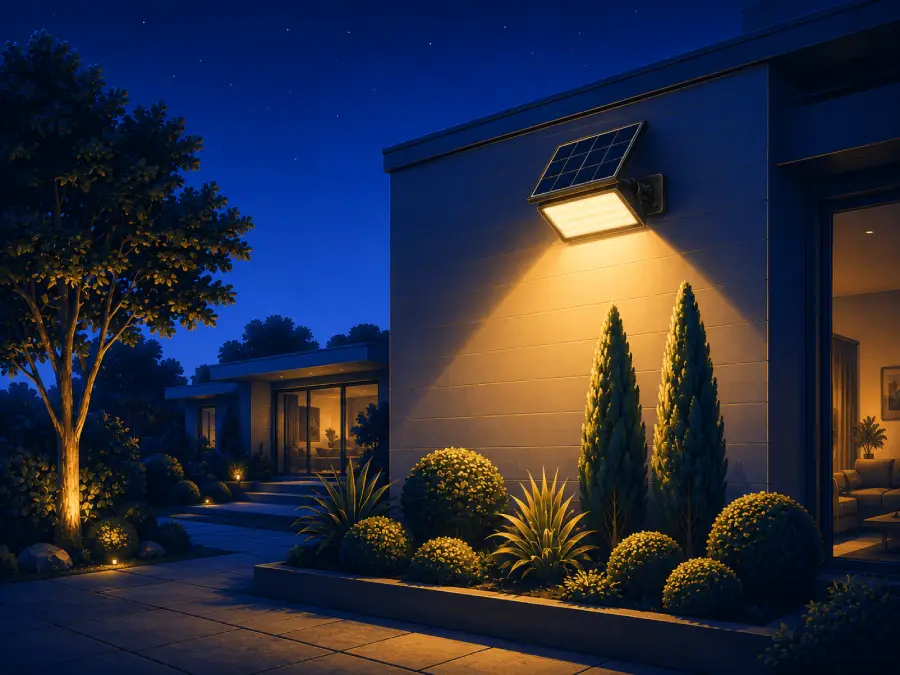 02
02
Best for broad general illumination where coverage matters more than a dramatic focal effect.
Explore solar flood lights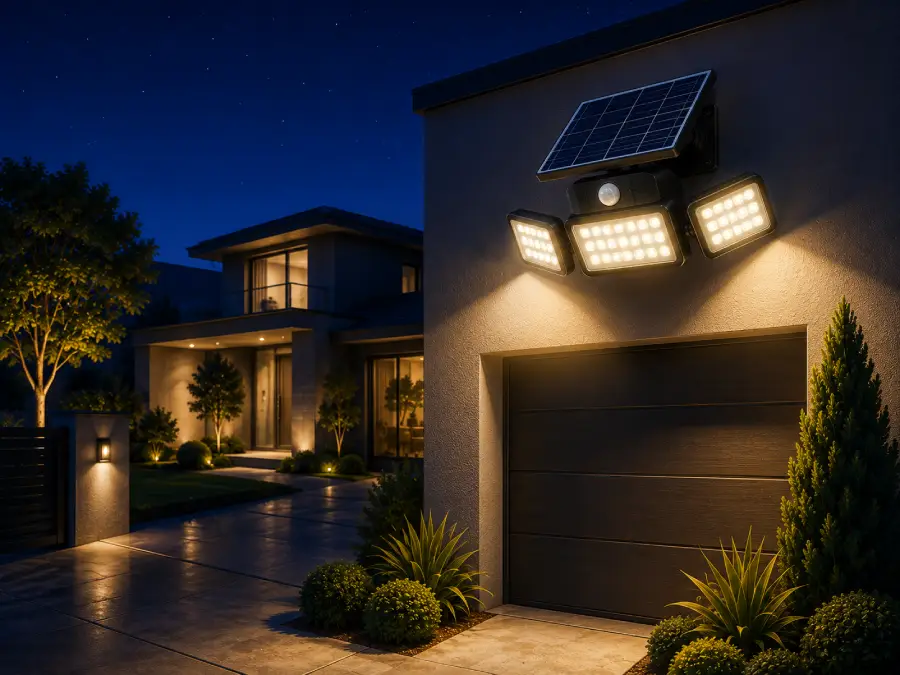 03
03
Compare wide-area flood patterns, focused heads, motion zones and glare control for entrances and side passages.
Explore solar security lights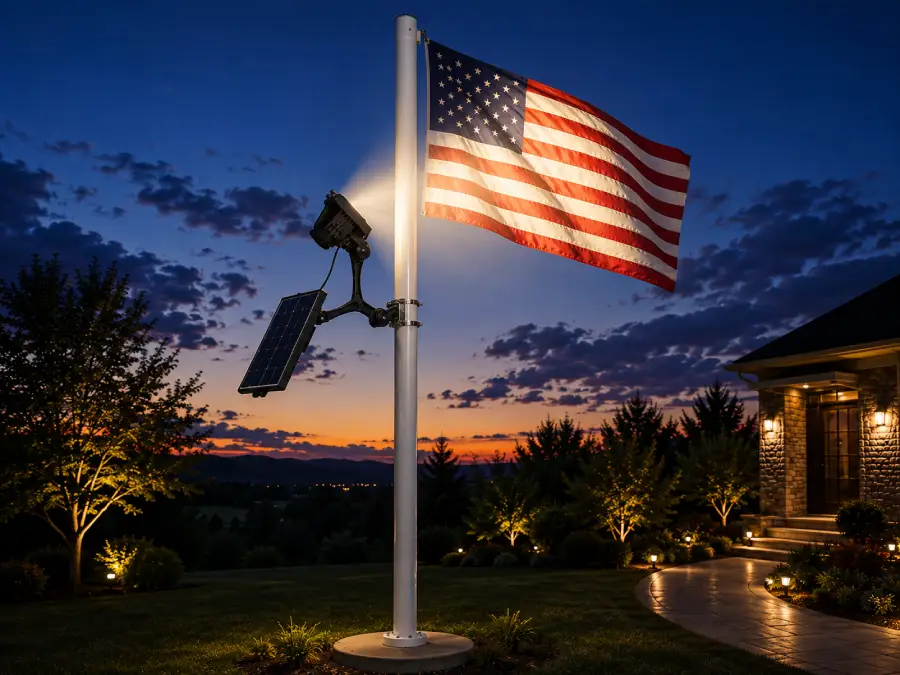 04
04
Purpose-built beam placement helps the light reach the moving flag instead of illuminating only the lower pole.
Explore solar flagpole lightsThe product name is only a starting point. Actual beam width, distance, mounting and glare control determine the result.
The right choice depends on what you need to see and how widely the light must spread.
Return to the quick answerA spotlight produces a narrower, more concentrated beam for a specific subject. A floodlight spreads light across a wider area for general visibility.
Neither is universally better. A spotlight is better for a tree, flag or sign. A floodlight is better for a driveway, yard, patio or entrance area.
Start with a spotlight because a tree is a defined subject. Choose a beam wide enough to cover the trunk and canopy from the planned mounting distance.
Explore solar spot lightsA floodlight is usually the better starting point because a driveway needs broad, even coverage. A spotlight may still be useful for a gate, house number or specific access point.
Explore solar flood lightsA spotlight can look brighter on one subject because it concentrates light into a smaller area. That does not necessarily mean it produces more total lumens.
There is no single residential cutoff used by every brand. Smaller angles are described as narrow or spot beams, while larger angles are described as flood or wide beams. Check the actual angle and distribution rather than relying on the name.
Yes. A floodlight can provide broad practical visibility while spotlights add focused light to trees, signs, gates or architectural details.
Floodlights are useful for broad security coverage, but beam control, glare, mounting and motion detection matter as much as width. A focused light may be better for a narrow side passage or gate.