Selected and explained by Armand at Greenlytes
Solar Post Lights
Solar post lighting is not one installation type. Some fixtures cap a fence or deck post, others mark railings, steps and deck edges, and portable models bring light to the table without permanent mounting. Compare the collection by where the light has to go, how it attaches and what role it needs to play after dark.
- Post, deck & railing options
- No wiring required
- Outdoor-focused selection
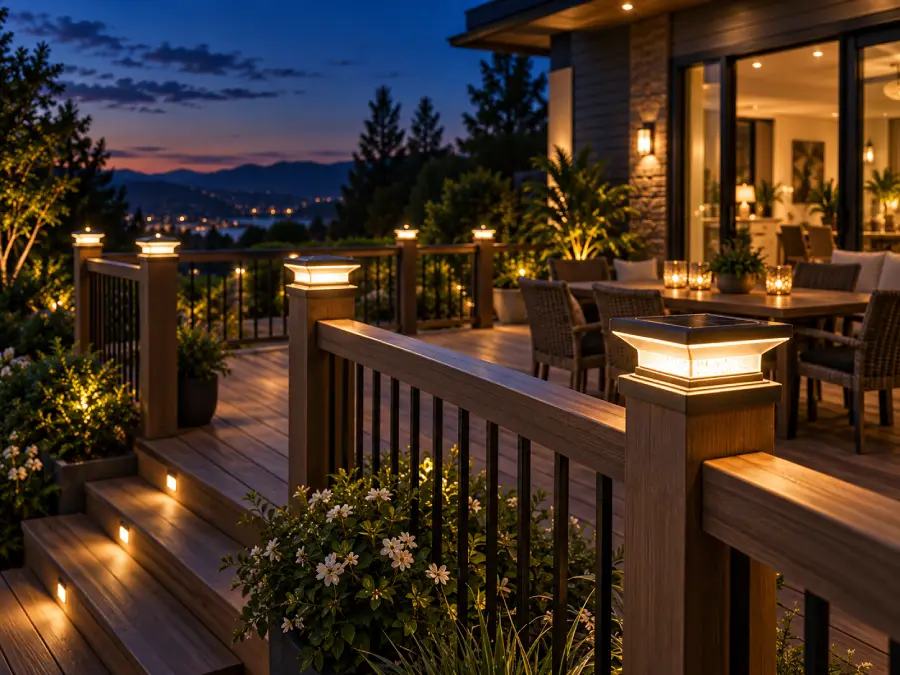
Featured Product
Our first place to look when the job is specifically to finish deck or fence posts with a substantial solar fixture.
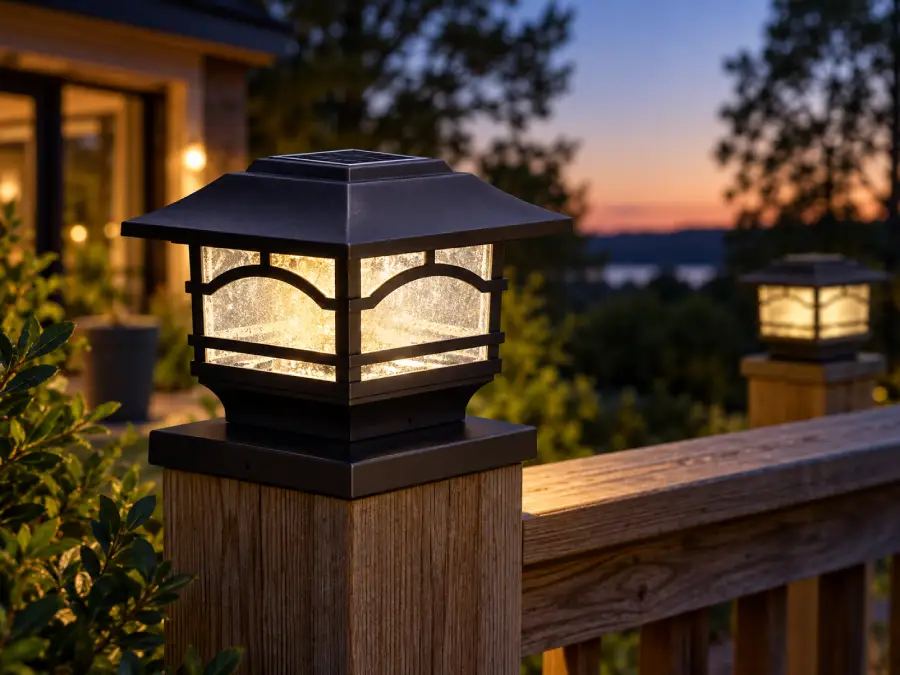
Greenlytes Pick
MAXSA Solar Mission Style Post Cap & Deck Railing Lights
The Mission design combines a metal body and seeded glass with warm-white output and adapters for 4×4 and 6×6 posts. Pack-size and finish choices make it the most complete post-cap option in this collection when the fixture itself is meant to be visible.
- Light output
- 23 lmPer light
- Post fit
- 4×4 / 6×6Post sizes
- Pack options
- 2 or 4Lights per pack
Choose by placement before you choose by style.
These six products do different jobs. Start with the surface or space you need to light: a post top, railing, step, deck edge or table. Then compare fit, material, output and mounting.
Post caps & deck railings
MAXSA Solar Mission Style Post Cap & Deck Railing Lights
A substantial metal-and-seeded-glass option for 4×4 and 6×6 posts, with warm-white light and a choice of 2-pack or 4-pack configurations.
- Light output
- 23 lmPer light
- Fit
- 4×4 / 6×6Post sizes
- Format
- 2 or 4Lights per pack
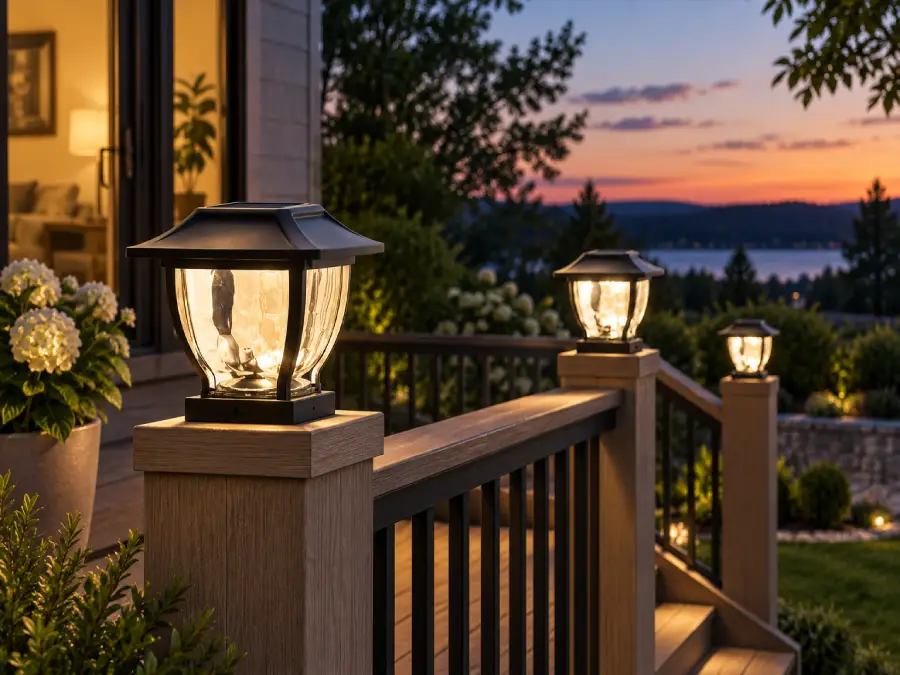
Decorative post-cap lighting
MAXSA Solar Wave Post Cap & Deck Railing Lights — 2 Pack
A two-light post-cap and railing set offered in several finishes, suited to adding low-level decorative light along decks, fences and outdoor boundaries.
- Pack size
- 2Lights
- Placement
- Post / railOutdoor accent
- Finishes
- 4Listed options
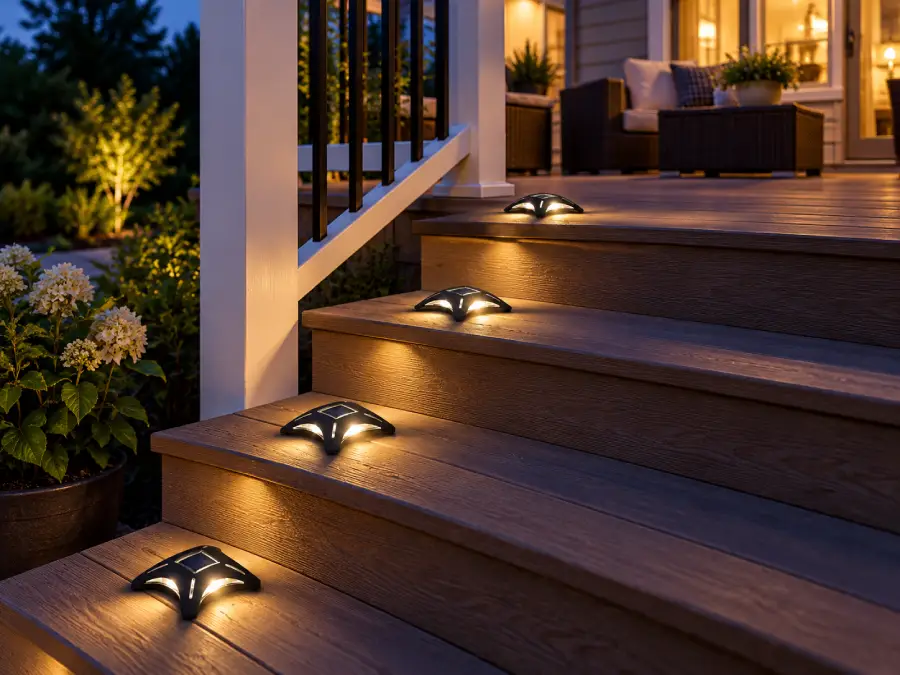
Steps, paths & deck edges
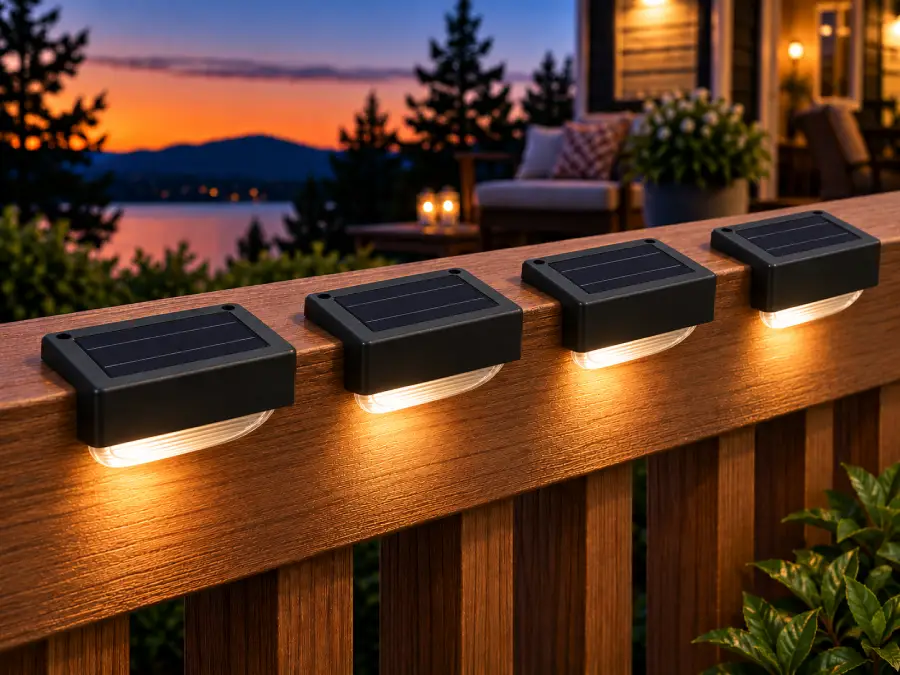
MAXSA Ninja Stars™ Solar-Powered LED Accent Deck Lights — 4 Pack
Compact four-pack accent lights that can sit flat or mount to outdoor surfaces, making them useful where subtle marker light matters more than broad illumination.
- Pack size
- 4Lights
- Runtime
- Up to 12 hMaximum
- Mounting
- Flat / fixedTwo modes
Deck & railing markers
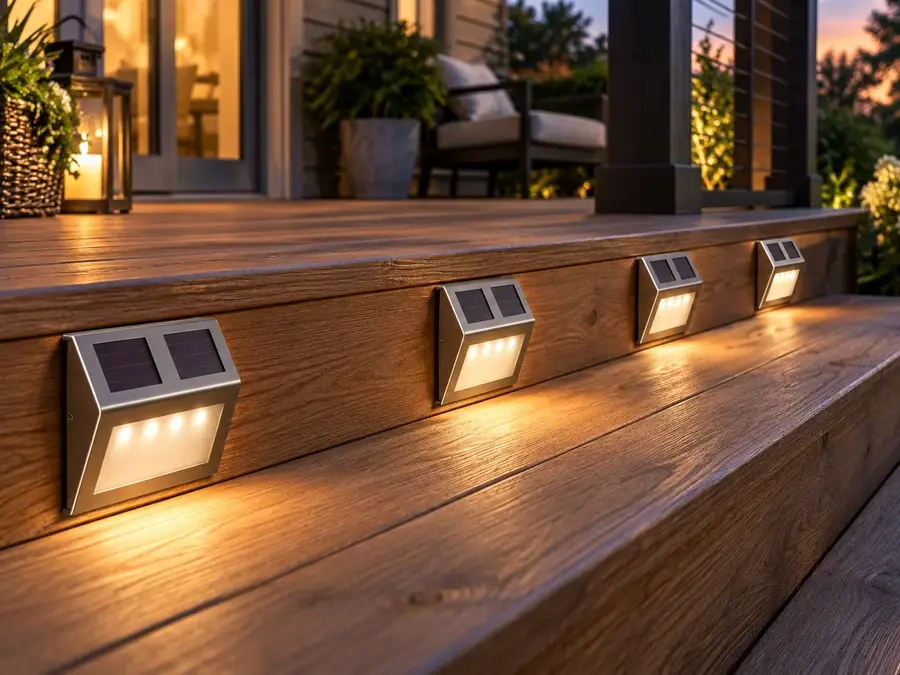
MAXSA Solar-Powered LED Deck Lights — 4 Pack
A compact plastic four-pack for railings, deck edges and steps, with automatic dusk-to-dawn operation and four finish choices for easier visual matching.
- Pack size
- 4Lights
- Light color
- 7000KCool white
- Finishes
- 4Black, brown, white, oak
Metal deck & step lighting
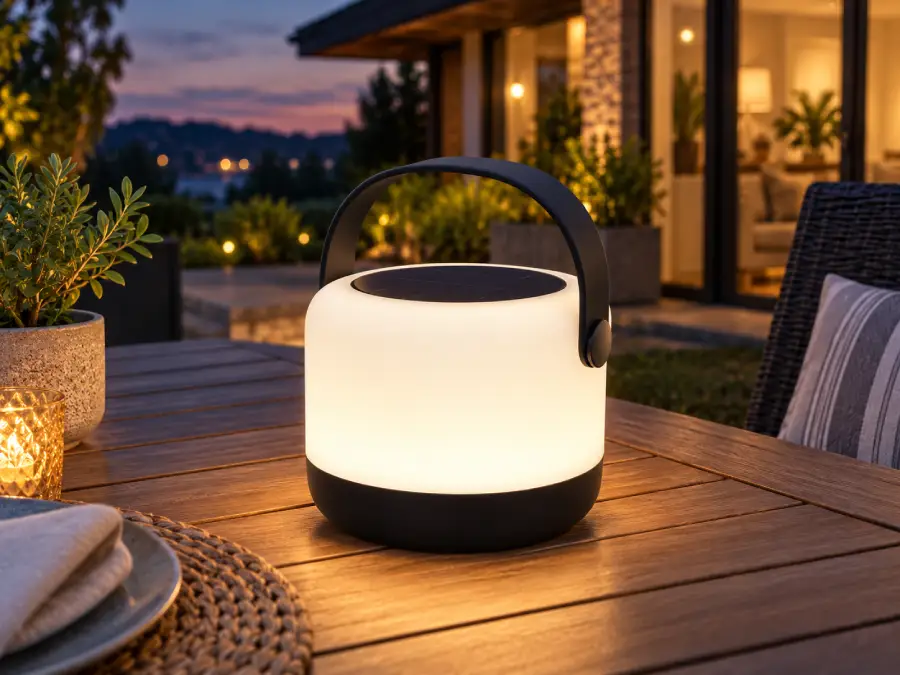
MAXSA Solar-Powered Metal Deck Lights — 4 Pack
A four-pack with a thin metal housing and 15-lumen output per light, intended for decks, porch steps and paths where a more substantial finish is preferred.
- Light output
- 15 lmPer light
- Pack size
- 4Lights
- Finishes
- 2All metal stainless / bronze
Portable / tabletop
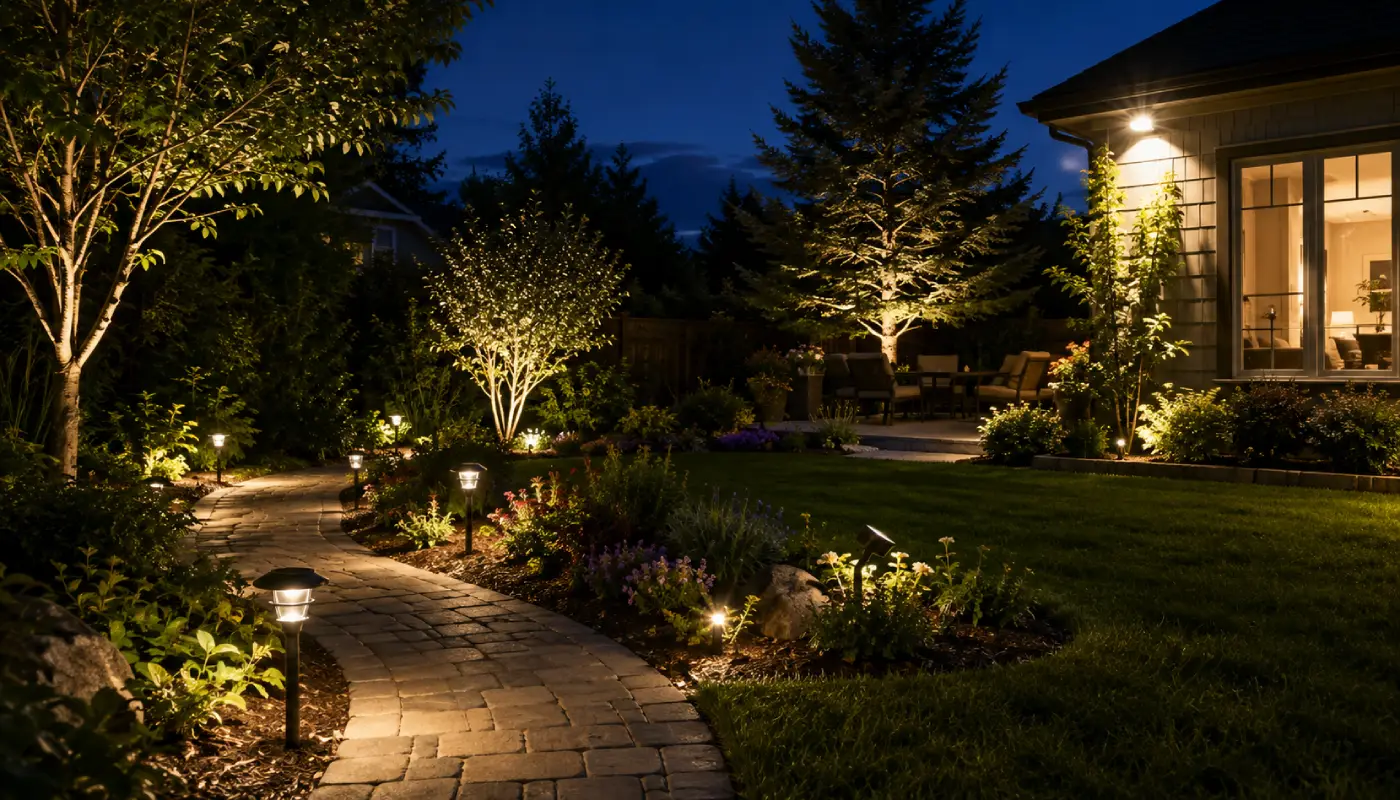
MAXSA Portable Solar Table Light
The movable option in the collection: place it on a deck or patio table, hang it by its built-in strap, and recharge it by solar power or USB.
- Light output
- Adjustable80–300 lm
- Charging
- 2 waysSolar + USB
- Placement
- PortableTable / hang /camping
Get More from Your Solar Post & Deck Lights
Fit, sunlight and placement matter more here than complicated setup. Check those basics before deciding a fixture is underperforming.
Measure Before You Buy
For a post-cap light, measure the post itself rather than relying on a visual estimate. Nominal lumber sizes and finished post dimensions are not always the same.
Check the Sun at the Actual Mounting Point
A deck can feel sunny while a post cap or railing sits in shade from the house, roofline, furniture or nearby trees for much of the day.
Separate Marker Light from Area Lighting
Deck-edge and post-cap lights are often there to define boundaries, steps and structure. They should not be judged as though they were security floodlights.
Clean the Solar Surface and Recheck Fasteners
Dust and outdoor debris can reduce the light reaching a small integrated panel. Periodically clean the solar surface and make sure mounted fixtures remain secure.
- Better chargingGive integrated panels useful daylight
- Better fitMatch the fixture to the post or surface
- More consistent runtimeProtect the daily energy budget
- Cleaner installationKeep mounted lights secure and intentional
How I decide what belongs on Greenlytes
I base Greenlytes recommendations on documented specifications, supplier information and the practical job each light is designed to do. Manufacturer data establishes the product facts; Greenlytes analysis explains what those facts mean when you are choosing between post caps, deck lights, step markers and portable lighting.
Specification review
I compare the specifications that change the installation in practice: post fit, dimensions, output, materials, charging, runtime and mounting.
Use-case fit
Each product needs a clear job. A post cap, step marker and portable table light can share a deck without being interchangeable.
Supplier consistency
Preference goes to products backed by specifications and documentation that can be checked, compared and kept current.
Clear trade-offs
I make the boundary visible: where a product fits, what it does not replace and when another installation type makes more sense.
Ongoing review
Recommendations are reviewed when specifications, availability or the collection itself changes.
Buyer-first selection
A smaller collection with distinct installation roles is more useful than a long grid of near-duplicate products.
Editorial review: Armand, Greenlytes · Updated
“For this category, I start with one question: where does the light physically need to live? Once that is clear, fit, brightness and finish become much easier to compare.”
01What size solar post cap light do I need?
Measure the actual top of the post before choosing a fixture. The mounting system has to match the post dimensions; the product name or appearance alone cannot tell you that.
The Mission lights in this collection are documented for 4×4 and 6×6 post sizes. Other designs should be checked against their own product-page fit information rather than assumed to use the same mounting system.
02What is the difference between a solar post cap light and a solar deck light?
A post-cap light finishes the top of a post and becomes part of the post itself. A deck light is usually smaller and mounts on or near a railing, step, edge or other surface.
That changes both the visual effect and the installation. Post caps are more architectural; deck and step lights are often better for low-level markers and repeated placement along a route or boundary.
03How bright should solar deck and post lights be?
There is no single target because the jobs differ. A post cap or step marker may only need enough light to define structure and edges, while a portable table light needs more usable local output.
That is why this collection ranges from low-output accent fixtures to the portable MAXSA table light with adjustable 80–300 lumen output.
04Where should solar deck lights be installed?
Useful locations include railings, deck edges, steps and transitions where a small amount of light helps define the structure after dark. Avoid placing them where the fixture itself creates glare at seated eye level.
Because these models rely on solar charging, the chosen surface also needs enough daylight for the panel. A visually perfect location can still be a poor charging location.
05Do solar post and deck lights need direct sunlight?
They need useful solar exposure to replenish the battery. The amount of energy collected changes with season, cloud, shade and the orientation of the solar surface.
Integrated-panel designs make installation simple, but they also mean the whole fixture has to live where charging conditions are acceptable.
06Are metal solar deck lights better than plastic ones?
Not automatically. Metal can give a fixture a more substantial architectural appearance, while plastic can keep a light compact and light in weight. The better choice depends on the installation, finish you want and the product's documented construction.
In this collection, the Metal Deck Lights and the plastic LED Deck Lights occupy similar placement territory but offer different materials and finish choices.
07How do I choose the right solar post or deck light?
Start with the physical location: post top, railing, step, deck edge or table. Then verify dimensions and mounting, decide how much light the job actually needs, and check whether the solar surface will receive useful daylight.
Finish with material, color and pack size. Those choices matter, but they should come after compatibility and purpose.
Ready to match the light to your deck, post or outdoor space?
Go back to the collection with the mounting location, dimensions, lighting job and available sun in mind. Once those are clear, the right product family becomes much easier to identify.