Selected and explained by Armand at Greenlytes
Solar Parking Lot Lights
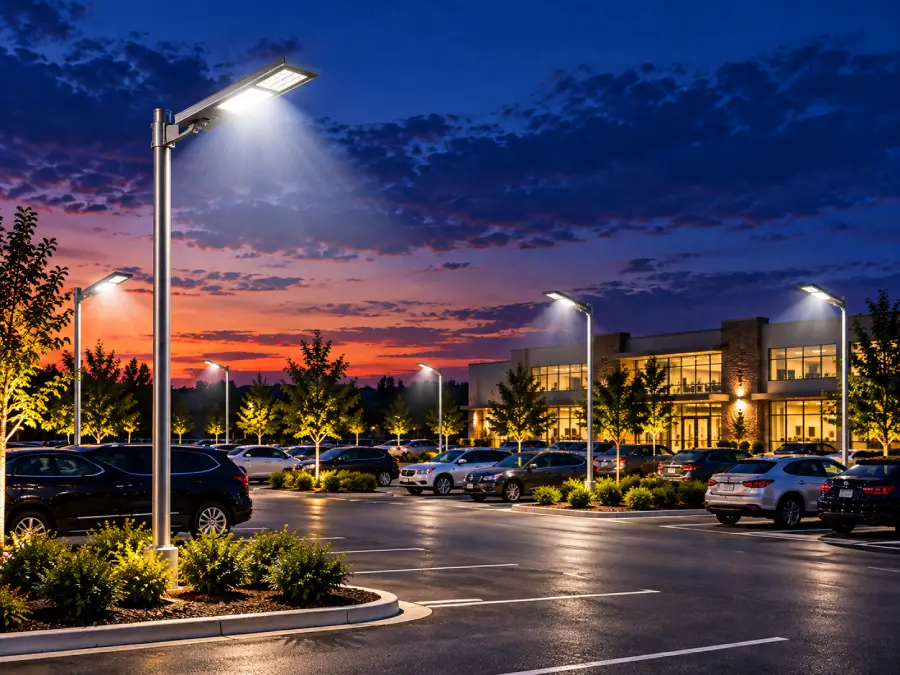
Solar parking lot lights can illuminate parking areas, private roads, entrances, campgrounds and other sites without trenching power to every fixture. Compare directional street lights, motion-responsive security lights and 360° area lights by output, mounting height and the type of space they are designed to cover.
- Off-grid lighting
- Multiple coverage formats
- Commercial outdoor use
Designed for
Off-grid parking & area lighting
Greenlytes Pick
Featured Product
Our pick for larger sites that need the highest directional output in this collection, a 15–20 ft mounting range and IP67 weather protection.
Greenlytes Pick
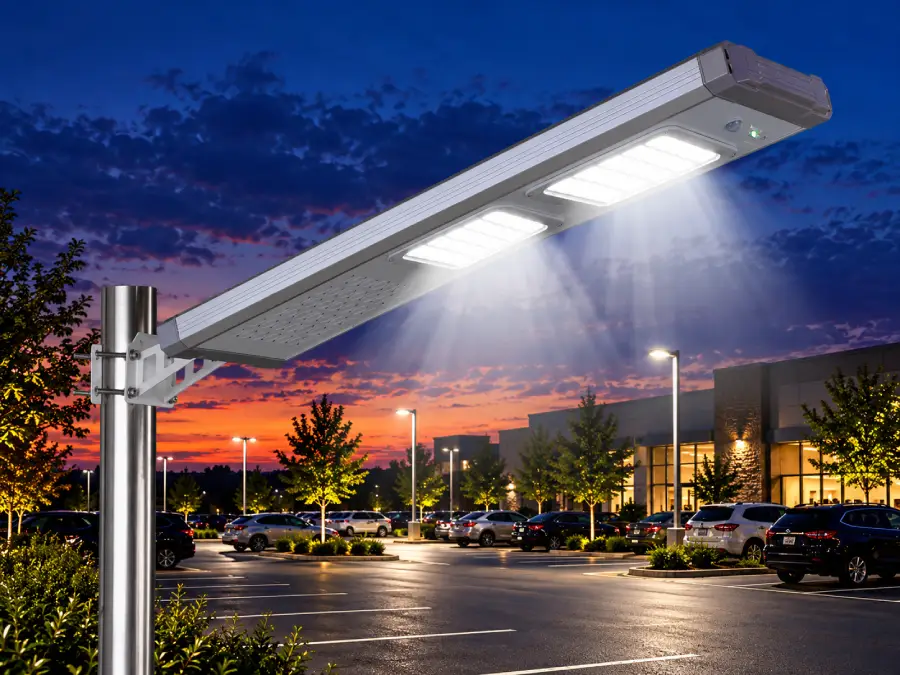
40-Watt Solar Street Light
The highest-output directional model in the current range, with 4,400 lumens, a 60W monocrystalline solar panel and IP67 protection. It is the strongest fit here for larger parking areas, private roads, perimeters and sites that can use a 15–20 ft mounting height.
- Light output
- 4,400 lm 40W LED
- Mounting height
- 15–20 ft 4–6 m
- Weather rating
- IP67 Outdoor rated
Shop the collection
Choose the light for the site—not the wattage alone.
Start with the way the site needs to be lit. A private road usually calls for directional light; an open plaza may benefit from 360° coverage; an entrance or perimeter may need motion-responsive security lighting. Then compare output and mounting height within the right type of fixture.
Entrances & small parking areas
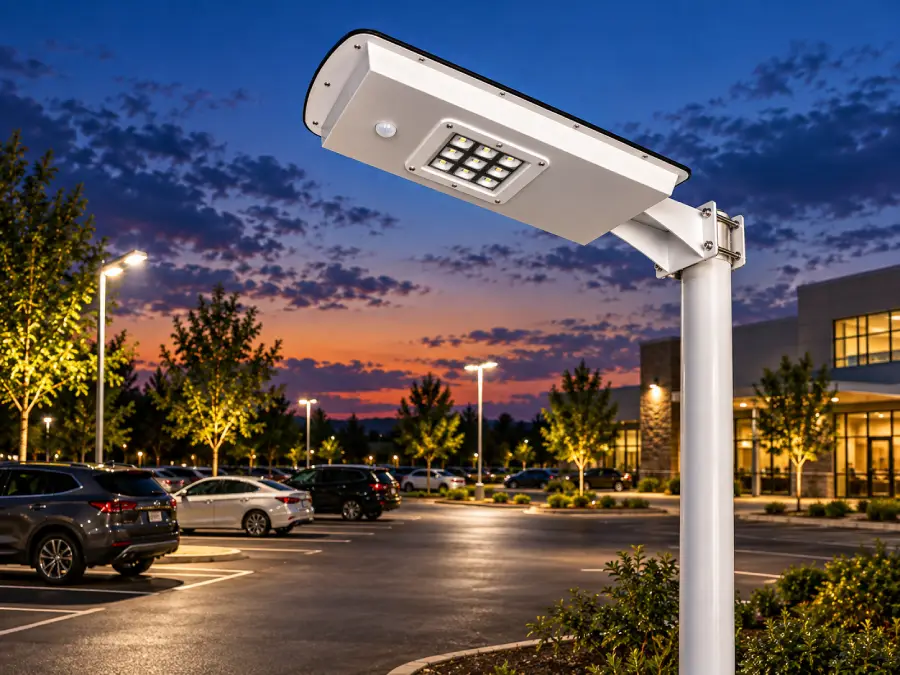
10-Watt Solar Street Light
A compact directional light for entrances, driveways and smaller parking areas. Its 6–13 ft mounting range suits sites that do not need a tall pole.
- Light output
- 1,700 lm Low: 1,100 lm
- Mount height
- 6–13 ft Recommended
- Motion
- 16–33 ft PIR range
Medium parking & private roads
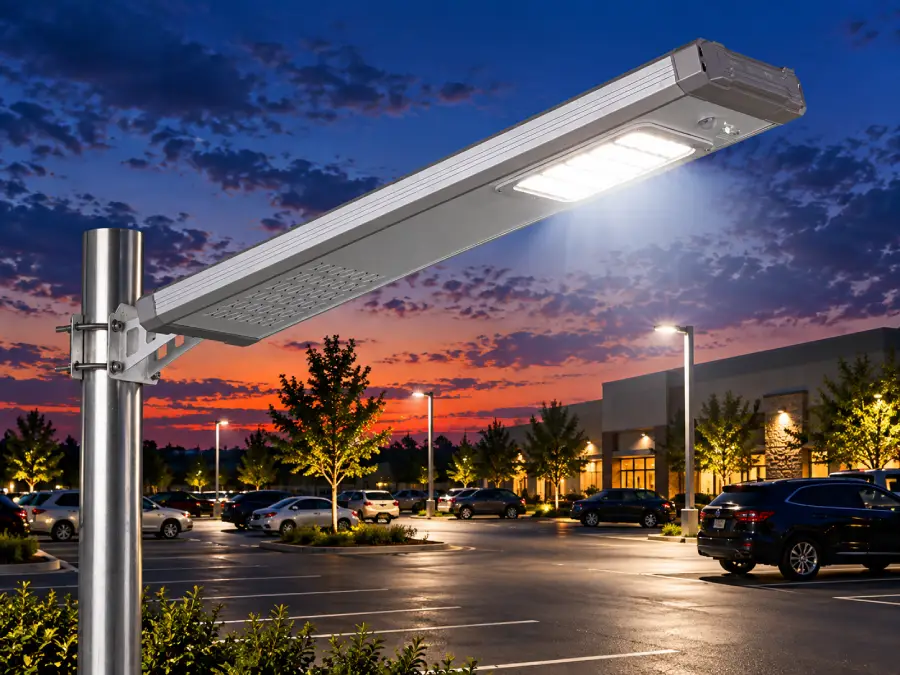
20-Watt Solar Street Light
A practical step up for medium parking areas, larger driveways and private roads, with up to 2,200 lumens and a 10–16 ft mounting range.
- Light output
- 2,200 lm Low: 1,100 lm
- Mount height
- 10–16 ft 3–5 m
- Weather
- IP65 Outdoor rated
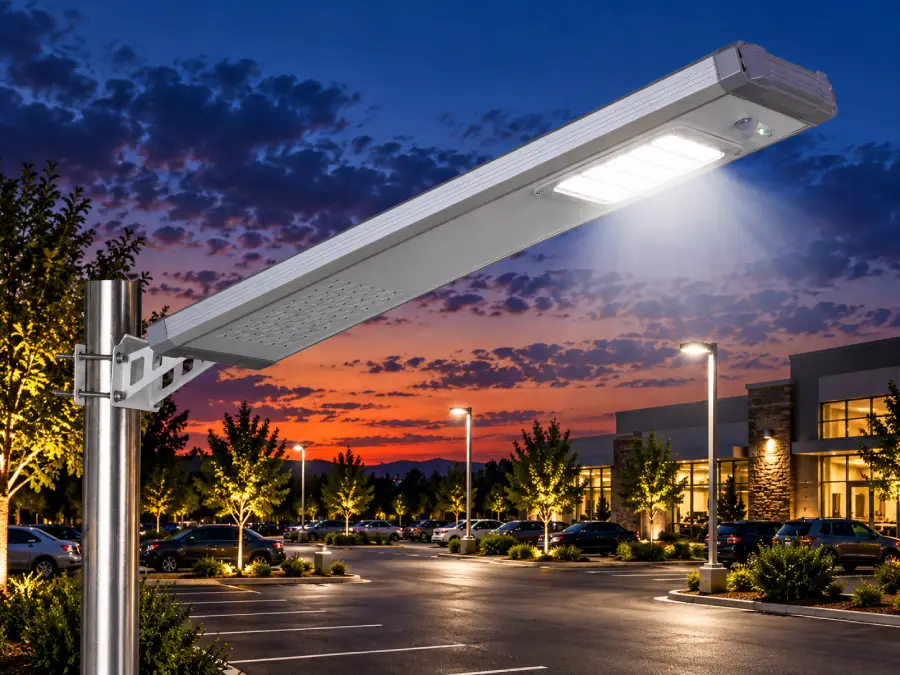
Larger parking & private roads
30-Watt Solar Street Light
For larger parking areas and private roads, this model raises output to 3,300 lumens and moves the recommended mounting range to 15–20 ft.
- Light output
- 3,300 lm Maximum
- Mount height
- 15–20 ft 4–6 m
- Weather
- IP66 Outdoor rated
Highest-output directional option
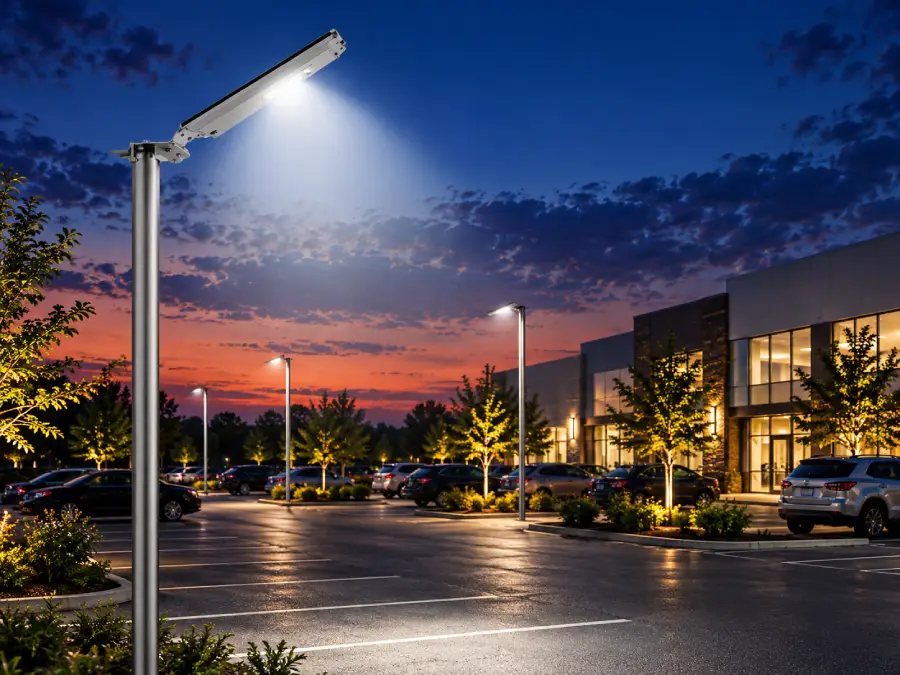
40-Watt Commercial Solar Parking Lot Light
The highest-output directional model here, with 4,400 lumens for larger parking areas, private roads and perimeter zones using 15–20 ft mounting.
- Light output
- 4,400 lm Maximum
- Mount height
- 15–20 ft 4–6 m
- Weather
- IP67 Outdoor rated
Entrances, access points & perimeters
Commercial Solar Parking Lot Security Light
Built for entrances, access points and perimeter zones, this model automatically increases its light output when motion is detected at night.
- LED array
- 64 LEDs High-output
- Motion boost
- 2× On detection
- Mounting
- Dual Wall or pole
360° open-area coverage
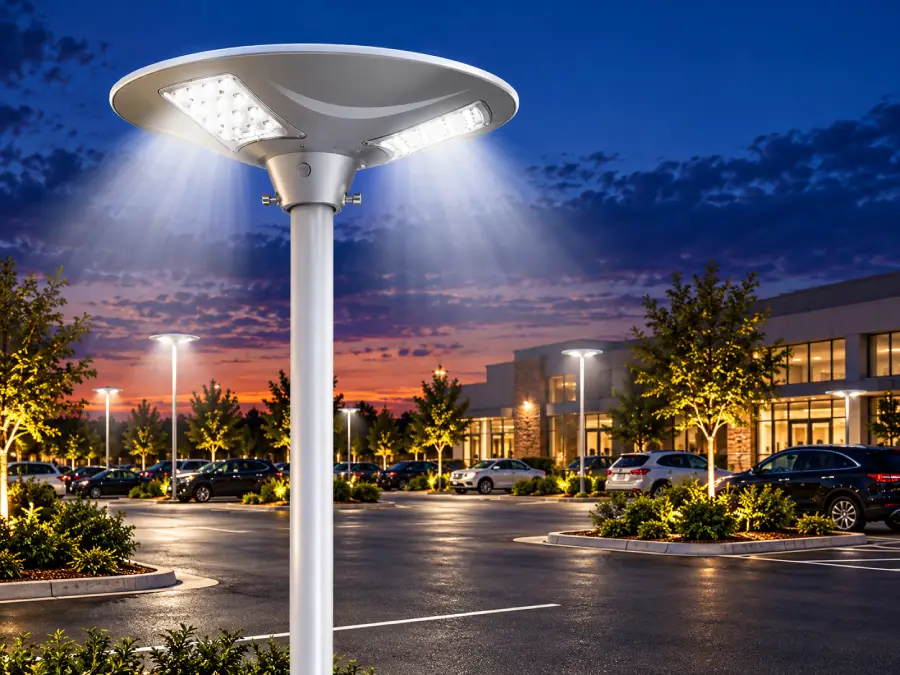
360° Solar Parking Lot Area Light
A 360° option for open parking zones, plazas and courtyards where light needs to spread around a central pole instead of projecting in one direction.
- Light output
- 2,000 lm Maximum
- Solar panel
- 18.5 W Updated panel
- Runtime
- 12 h max Full charge
Parking, campgrounds & RV areas
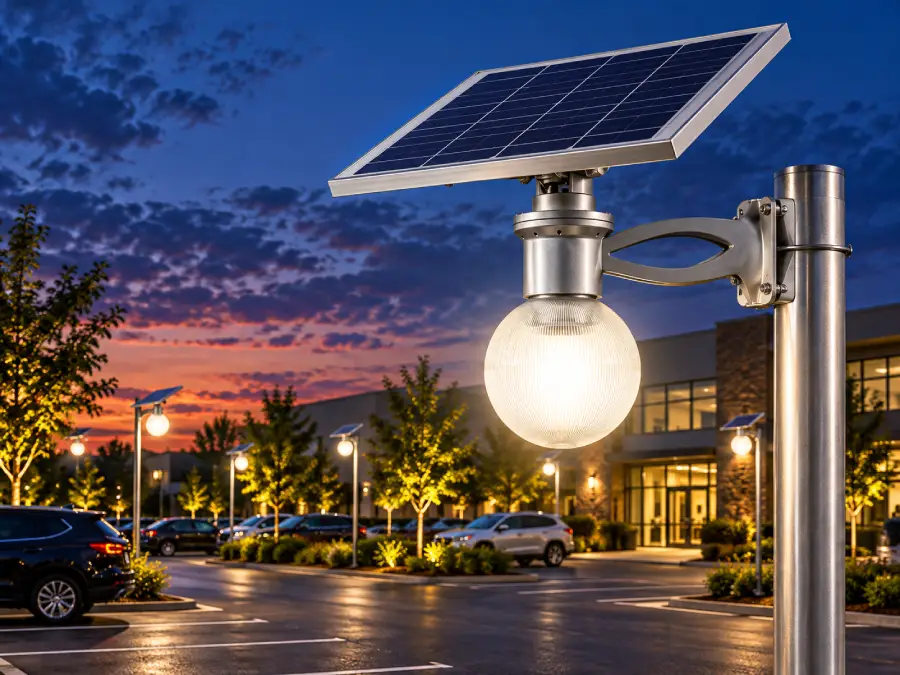
12W Solar Parking Lot & Area Light
A flexible choice for parking zones, campgrounds, RV parks and remote sites, with motion-responsive lighting and either wall or pole mounting.
- Light output
- 1,800 lm Maximum
- Solar panel
- 40 W 13.5 V
- Mount height
- 8–18 ft Pole or wall
Get More from Your Solar Parking Lot Lights
Charging position, beam aim and seasonal changes can all reduce performance. Check those parts of the setup before assuming the product itself is at fault.
Sunlight
Available only where the panel can actually see useful sun.
Energy
The day's solar input becomes the night's energy budget.
Site coverage
Useful only if mounting and distribution put light where the site needs it.
Performance
Good results come from matching charging, mounting, spacing and distribution.
Start with stored energy
Charge Before First Use
Give the battery a proper charge before deciding whether the light is bright enough or lasts long enough. A weak first night can simply be a weak starting charge.
Protect daily charging
Keep the Panel in Direct Sun
Look at the panel's sky, not just the light's location. Trees, rooflines and walls can make an otherwise perfect lighting position a poor charging position.
Put the beam where it matters
Check Coverage After Dark
Aim for the feature itself, not the ground beneath it. With a concentrated beam, a small change in angle can move a surprising amount of useful light off target.
Keep the setup aligned
Recheck Panels, Mounts and Shade
Recheck the mount, cable and panel when plants grow or weather changes. A setup that worked in spring can be partly shaded or misaligned a few months later.
- Better charging Put the panel where charging actually works
- Better coverage Reduce dark gaps and misplaced light
- Longer runtime Think of runtime as a daily energy balance
- Stable installation Keep mounts and solar exposure checked
Continue with Greenlytes Lab
Go deeper on the variables behind the recommendation.
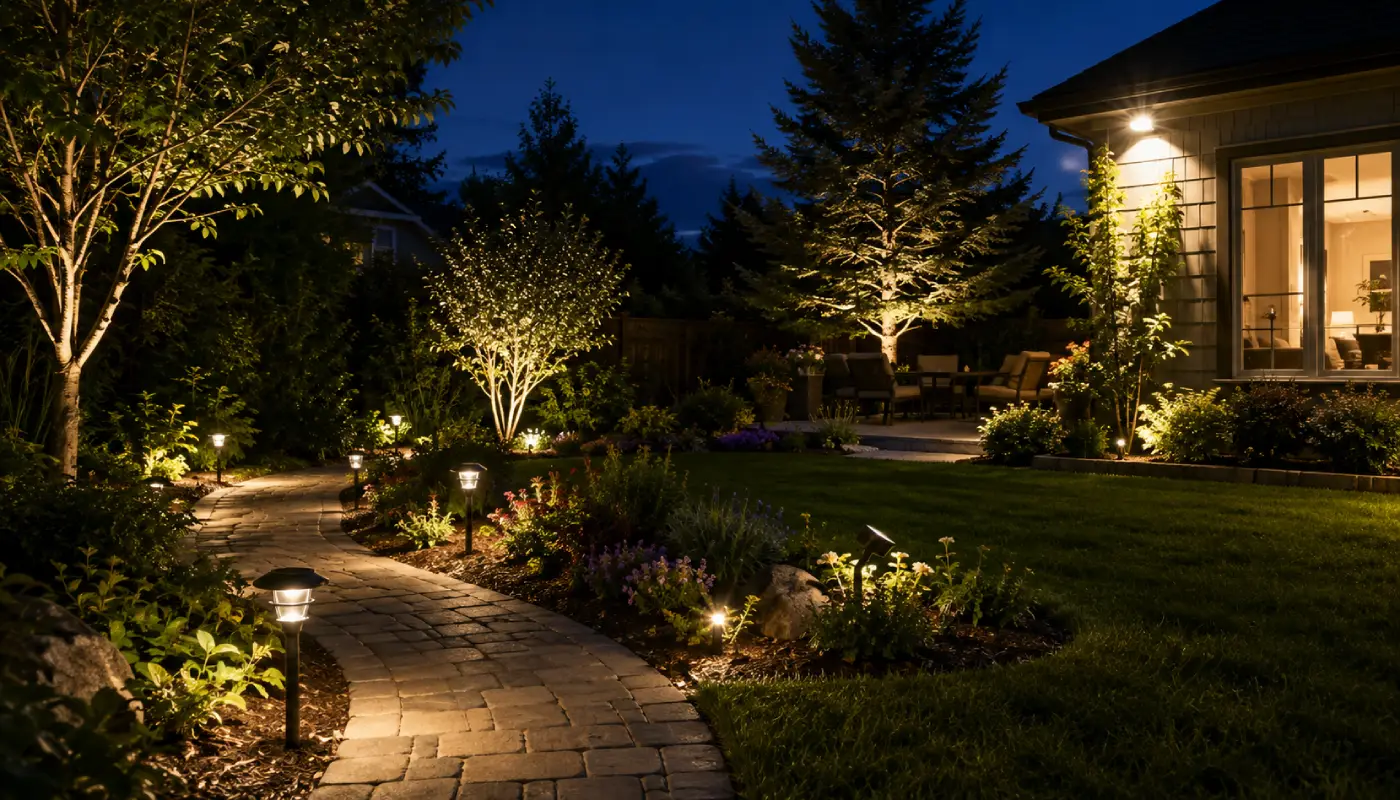
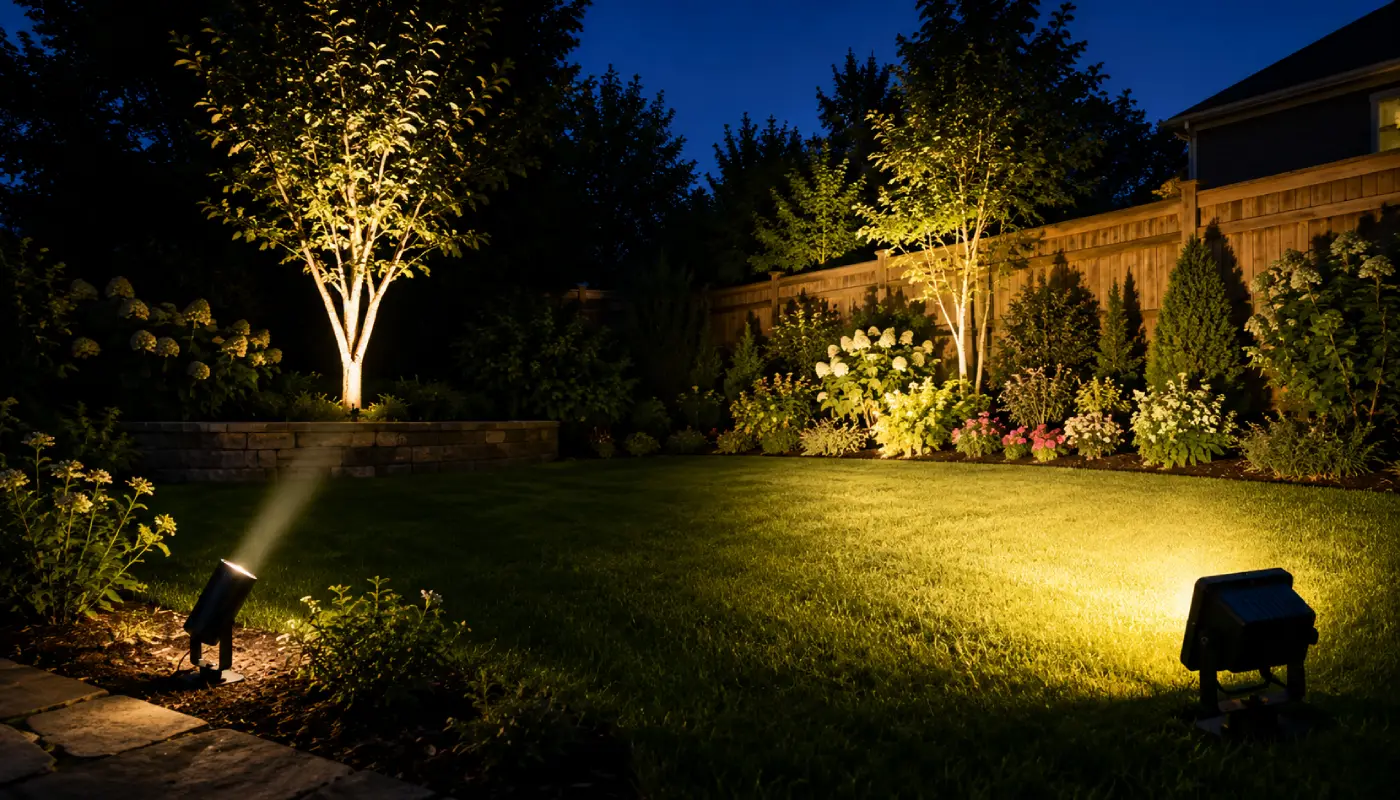
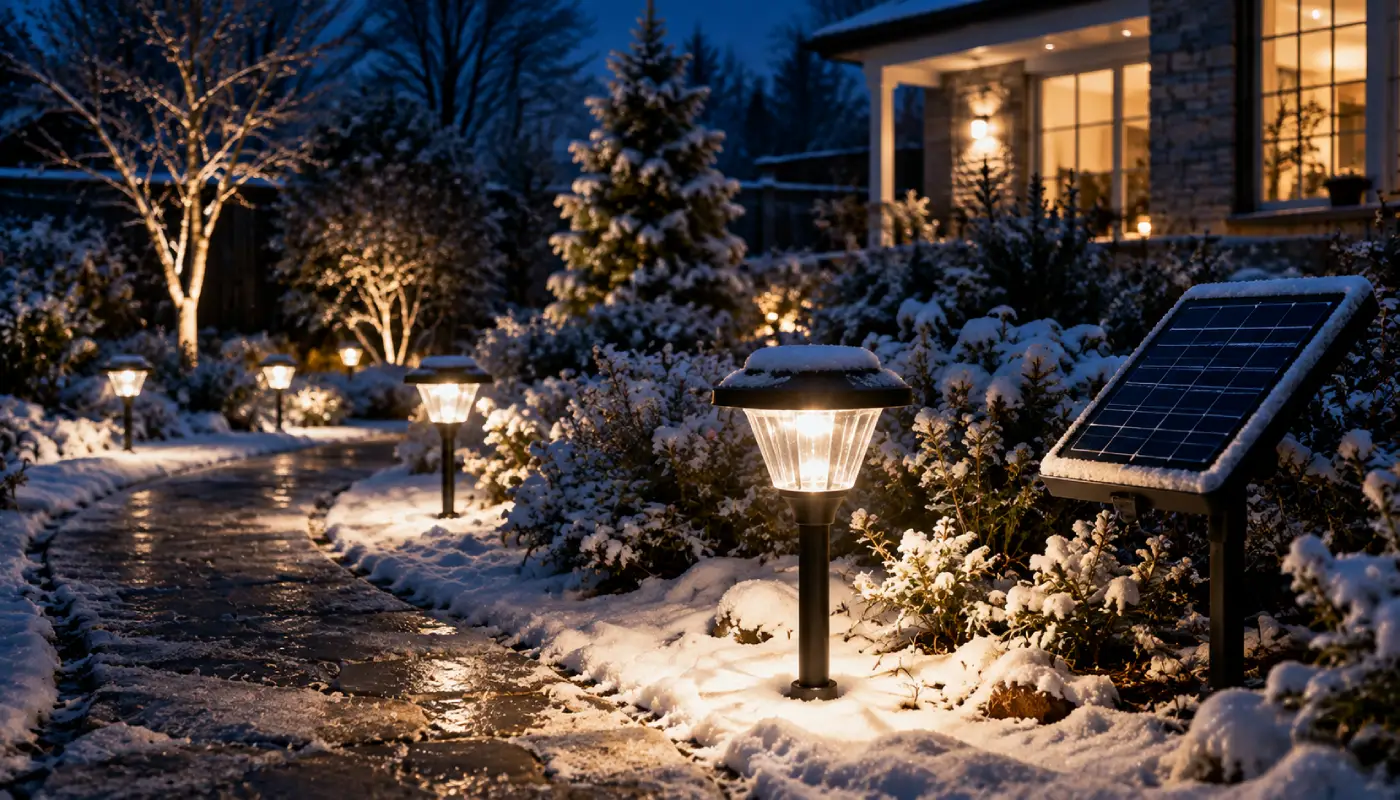
These Greenlytes Lab guides provide the deeper explanation behind the category advice: useful brightness, beam distribution and the effect of weaker winter charging. Use them when a short category answer needs more context or supporting detail.
Why Greenlytes
How I decide what belongs on Greenlytes
I base Greenlytes recommendations on documented specifications, supplier information and the practical job each light is designed to do. When a claim comes from a manufacturer or supplier, I treat it as sourced product information; Greenlytes analysis is the interpretation of what those specifications mean for the buyer.
Specification review
Specifications are compared for what they change in practice: mounting, spacing, charging, runtime and the way the light can be used. Headline numbers are not treated as conclusions on their own.
Use-case fit
Each model is matched to a practical job. A tree, sign and wall may all need accent light, but each asks something different from the beam.
Supplier consistency
Preference goes to products backed by clear specifications and supplier information that can be checked, compared and kept current.
Clear trade-offs
Every useful recommendation needs a boundary: where the product fits, where it becomes less suitable and when another type of light makes more sense.
Ongoing review
Recommendations are reviewed when specifications change, products are updated or a better-fit option becomes available.
Buyer-first selection
A smaller, clearer selection is more useful than a large catalog of products that solve the same problem without a clear reason to choose them.
Editorial review: Armand, Greenlytes · Updated
“My starting point is always the same: what are you trying to light, and what has to be true for the beam and the solar panel to work in that exact place?”
01 How many lumens do I need for a solar parking lot light?
There is no single lumen target that works for every parking area. A useful lighting plan considers lumen output together with mounting height, beam distribution, fixture spacing, ground-level illuminance and uniformity.
Greenlytes insight
Start with the site and required coverage. Lumen output becomes useful only after the mounting and distribution problem is defined.
02 How high should solar parking lot lights be mounted?
Use the recommended mounting range for the individual fixture. Mounting higher generally increases the area a light can cover, but it also changes the intensity and distribution of light at ground level.
03 How far apart should solar parking lot lights be installed?
Spacing depends on output, optics, mounting height, obstructions and the level of uniformity the site needs. Any published spacing figure should be treated as an initial planning reference, not a guarantee of ground-level performance.
Greenlytes insight
Reference spacing is a planning input, not a substitute for a photometric layout.
04 Can solar lights illuminate an entire commercial parking lot?
Yes, solar fixtures can light commercial parking areas. For a complete parking-lot layout, however, fixture selection should be checked against site dimensions, required illuminance and uniformity, mounting positions, optics, traffic patterns and any applicable local requirements.
Greenlytes insight
For a commercial project, fixture selection and lighting-layout compliance are separate questions.
05 What is the difference between directional and 360-degree solar area lighting?
A directional street light sends most of its useful light toward a defined area such as a drive lane or parking zone. A 360° area light spreads illumination around a central mounting point, which can work better in plazas, courtyards and other open spaces.
Greenlytes insight
Choose directional versus 360° distribution from the shape of the space—not from the product name.
06 Do solar parking lot lights work in winter and cloudy weather?
Yes, but winter performance depends on the solar energy available to recharge the battery. Shorter days, cloud and shade reduce charging, so panel exposure, battery reserve and the fixture's lighting program matter more during winter.
Greenlytes insight
For seasonal planning, see
Will Solar Lights Work in Winter?
.
07 Are solar parking lot lights suitable for campgrounds and RV parks?
Yes. Self-contained solar area lights can work well for campground parking, RV parks, pathways, entrances and remote common areas, especially where running underground electrical service would be difficult or expensive.
Greenlytes insight
Campgrounds often benefit from off-grid installation, but tree cover makes solar exposure especially important.
Make a confident choice
Ready to match the fixture to the site?
Go back to the products with the target, beam, panel position and energy needs in mind. If one of those still feels unclear, Greenlytes Lab explains the underlying variable in more detail.